6th Sample Papers
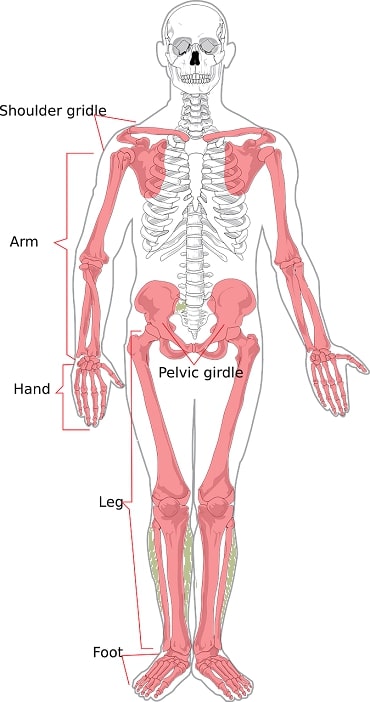
We have already understood in the previous chapter about changes around us and the reasons behind the changes. One important reason for change is the movement. Movement and locomotion are used in the same manner. Movement or locomotion is the ability of living or nonliving things to change their position or location. All organisms move including but plants movement is different than animals. Plants cannot shift their location from one place to another but animals can. However, the leaves, branches, roots have slight movement due to wind, water, or solar forces. Movement is a basic necessity of animals especially for humans. Movement helps in our daily activities, survival, and adaptation. Movement can improve our health by increasing breathing rate, circulation, digestion, and overall body functions. In this lesson we will be covering question answers about movement of human beings. Before going into question answers, we must understand tha human beings move by the action of muscles, bones, and joints.Our skeleton has 206 bones that provide structure, support, and movement. Bones of our body coordinate with muscles and joints to help us sit, stand, bend, run, jump, etc.
I. Fill in the blanks:
a) Joints of the bones help in the movement of the body.
b) A combination of bones and cartilages forms the skeleton of the body.
c) The bones at the elbow are joined by a hinge joint.
d) The contraction of the muscles pulls the bones during movement.
- The movement and locomotion of all animals is exactly the same (F)
- The cartilage are harder than bones (F)
- The finger bones do not have joints (F)
- The fore arm has two bones (T)
III. Answer the following;
1. What is a ball and socket joint?
Answer:In a ball and socket joint, the rounded end of one bone fits into the cavity (hollow space) of the other bone. It can allow movements in all directions. Elbow joint, and hip joints are ball and socket joints in our body.
2. Which of the skull bones are movable?
Answer: Lower jaw bone is the only movable bone in the skull bone.
3. Why can’t an elbow joint move backwards?
Answer: Elbow joint has hinge joint that doenstallo full range motion.A hinge joint ia like a door that can open and shut. A hinge joint moves in a plane and not in a circular manner. This joint allows movement in a plane only hence , elbow joint is not able to move backwards.
IV. Additional questions
1. How many bones are there in an adult?
Answer: 206 bones .
2. What is a skeleton?
Answer : A skeleton is a framework of bones that gives Support and necessary strength for our body.
3. What is a joint?
Answer: A joint is space where 2 or more bones Joined together with the help of other supportive structures like cartilage and tendon.
4. Name the longest and strongest bone in humans.
Answer: Femur bone or thigh bone is the longest and strongest bone.
5. Name the important joints of our body.
Answer: The major joints in our body are neck joint, shoulder joint, Elbow joint, wrist joint, Hip joint, knee joint and ankle joint.
6. Classify the joints in our body
Answer Joints are classified into movable and immovable Joints. Movable joints are also Known as synovial joints and immovable joints are called fibrous joints.
7. What are fibrous Joints? Answer : Fibrous Joints are also known as immovable Joints .In a fibrous joint, bones are connected by fibrous tissue with no scope for movement. Examples: sutures if skull bones, teeth in sockets and bones between tibia and fibula of lower legs.
8. What are Cartilaginous Joints ?
Answer: Cartilaginous Joints are made up of cartilages and are slightly Movable Joints. They can produce limited movement. Examples, pubic symphysis, intervertebral discs of backbone.
9. What are Synovial Joints?
Answer: Synovial Joints are freely movable joints. They are made Up of ball and socket. Synovial Joints are fixed inside a synovial cavity filled with Synovial fluid. Synovial fluid reduce friction and allows free movement of bones.
10. Classify the synovial Joints.
- Ball and Socket Joints allow movement in all directions (e.g shoulder, hip).
- Hinge Joints allow movement in one direction like a door hinge (e.g., knee, elbow).
- Pivot Joins allow rotational movement (e.g., neck, between radius and ulna).
- Gliding Joints allow sliding movements (e.g., wrist, ankle).
- Saddle Joint allows movement in different directions (e.g., thumb joint).
- Condyloid Joints allows movement but no rotation (e.g., wrist joint).
11. What is a tendon and ligament?
Answer: Tendons and ligaments are connective tissues . A tendon connects muscle to bone while a ligament connect bone to muscle.
V. State whether the statements given below are True or False- The bones are soft while cartilages are hard.
- Our skeletal system gives the body support and protects inner organs.
- Doctors use X-ray films to examine the injuries of bones.
- Skull is a single bone .
- Upper jaw is movable while lower jaw is immovable.
- Babies at birth have suture lines.
- Bones in the foot are normally set in an arch.
- A human body is born with about 206 bones.
- Bones in the birds are lighter than humans.
- Our backbone is not a single bone.
- Muscular foot in snail is part of its belly.
- The bones are moved by simultaneous contractions and relaxation of two sets of muscles.
- All the joints in our body are similar.
- Cockroaches cannot walk.
- The minute movable bristles in earthworm help in gripping th
Answers
- False
- True
- True
- False
- False
- True
- True
- False
- True
- True
- True
- False
- False
- False
- False.
V. Choose the correct option in the following questions:
1. Skull is a Skeleton of human body is made up of
- Single bone
- Ball and socket joint
- Combination fused bones
- Longest bone in our body
Answer: (C) Combination fused bones
2. The only movable joint in the skull is
- Neck joint
- Upper jaw
- Lower jaw
- None of these
Answer: (C) Lower jaw
3. Gliding joint among the following is
- Shoulder joint
- Hip joint
- Wrist joint
- Spinal joints
Answer: (C)Wrist joint
4. Knee joints are
- Hinge joints
- Ball and socket joints
- Pivotal joints
- Fixed joints
Answer: (A) Hinge joints
5. Human body has ______ bones
- 220
- 206
- 602
- 306
Answer: (B)-206
6. Which one of the following is the characteristic of birds?
- Strong muscles
- Light bones
- Hollow bones
- All of these
Answer: (D) All of these
VI. Match the following:
|
Column A |
Column B |
|
1) Skull |
A. Ball and socket joints |
|
2) Hip and shoulder joint |
B. Gliding joint |
|
3) Wrist joint |
C. Group of bones that support us to sit and stand |
|
4) Spinal column |
D. Joins bones to bones |
|
5) Tendons |
E. Connective tissue |
|
6) Ligaments |
F. Fusion of many bones |
|
7) Fibrous cartilage |
G. Joins bones to muscles |
Answers: 1-F , 2-A, 3-B , 4-C, 5-G 6-D, 7-E