

.jpg)

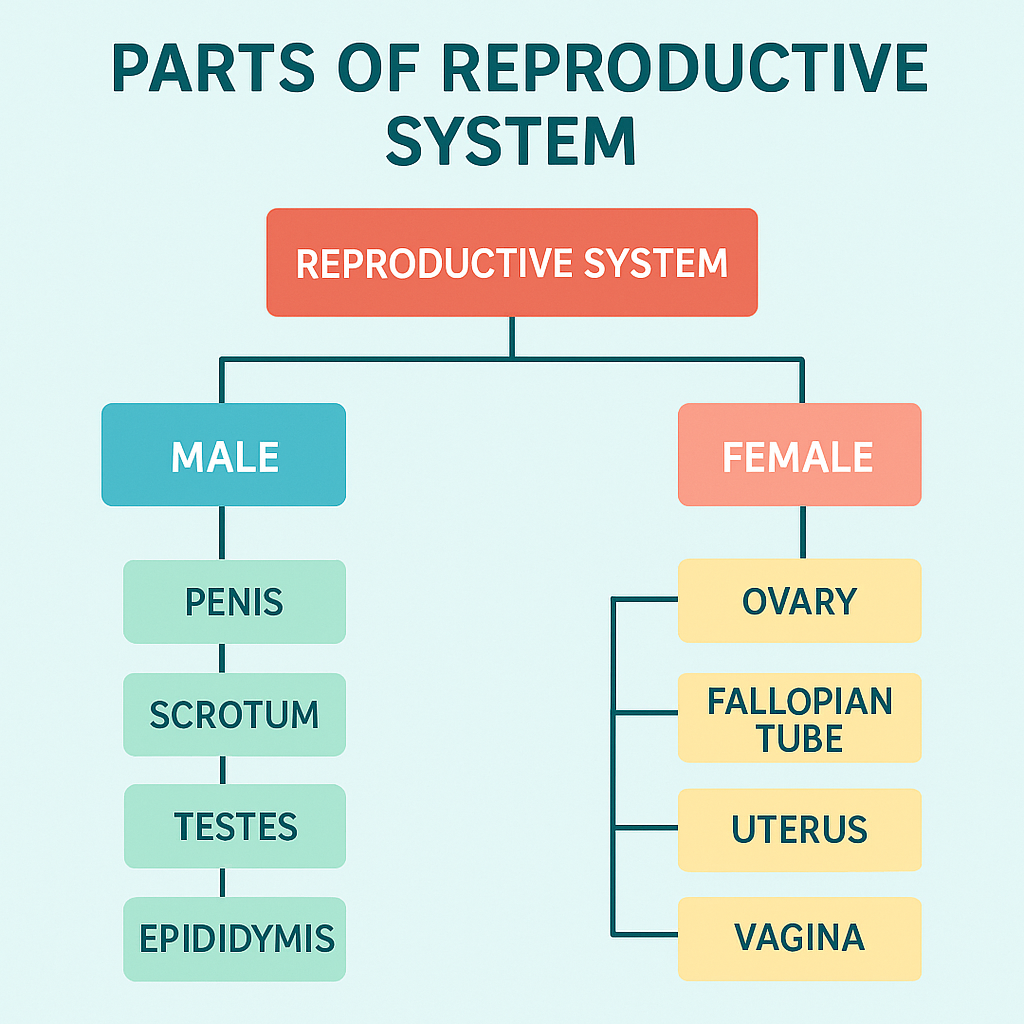

1. Penis
The penis is the male external sexual organ, primarily responsible for delivering sperm into the female reproductive system during sexual intercourse. It consists of three main parts: the root, which is attached to the body; the shaft, which is the elongated, cylindrical portion; and the glans, or head, which is the sensitive tip of the penis. The glans is covered by the foreskin in uncircumcised males, which can be retracted to expose the glans. The urethra, a tube running through the center of the penis, serves as the passage for both urine and semen, though not simultaneously. The penis also contains erectile tissue that can fill with blood during sexual arousal, causing it to become erect, a necessary function for penetration during intercourse. The structure of the penis is designed to facilitate reproduction by allowing sperm to be deposited in the female reproductive tract.
2. Scrotum
The scrotum is a pouch of skin and muscle that houses the male testes, which are responsible for producing sperm and the hormone testosterone. Located beneath the penis, the scrotum helps regulate the temperature of the testes, keeping them cooler than the body's core temperature, which is essential for optimal sperm production. The scrotum achieves this by adjusting its position relative to the body: it contracts to draw the testes closer when the temperature is cold and relaxes to allow them to hang lower when it is warm. This temperature control mechanism ensures that the sperm-producing cells in the testes function properly. Additionally, the scrotum is divided into two chambers, each containing one testis, providing a protective environment for these delicate organs.
3. Testes
The testes are two oval-shaped organs located within the scrotum, responsible for producing sperm and the hormone testosterone. They are vital components of the male reproductive system. The testes contain tightly coiled structures called seminiferous tubules, where sperm production (spermatogenesis) occurs. Once produced, the sperm move to the epididymis, where they mature and are stored. Testosterone, the primary male sex hormone, is also secreted by the Leydig cells in the testes and plays a crucial role in the development of male sexual characteristics, such as muscle mass, deepening of the voice, and the growth of facial and body hair. The testes are essential not only for reproduction but also for maintaining male secondary sexual traits..
4. Epididymis
The epididymis is a coiled tube located at the back of each testis, playing a critical role in the maturation, storage, and transport of sperm. Sperm produced in the seminiferous tubules of the testes move into the epididymis, where they undergo a maturation process, gaining the ability to swim and fertilize an egg. The epididymis is divided into three parts: the head, body, and tail. Sperm are stored in the tail of the epididymis until they are needed for ejaculation. During sexual arousal, sperm move from the epididymis into t he vas deferens, which transports them to the urethra for ejaculation. The epididymis is essential for sperm health, enabling them to be viable for fertilization.
5. Vas Deferens
The vas deferens is a long, muscular tube that serves as a conduit for mature sperm from the epididymis to the urethra during ejaculation. It is part of the male reproductive system and plays a crucial role in sperm transport. The vas deferens begins at the tail of the epididymis, travels upward through the pelvic cavity, and loops around the bladder before joining with the seminal vesicle to form the ejaculatory duct. During ejaculation, the muscular walls of the vas deferens contract, propelling sperm forward along with seminal fluid produced by the seminal vesicles, prostate gland, and bulbourethral glands. The vas deferens is essential for the delivery of sperm to the urethra, where it is then expelled from the body through the penis./p>
6. Seminal Vesicles
The seminal vesicles are two small, sac-like glands located behind the bladder in males, which play a key role in the production of semen. They secrete a significant portion of the seminal fluid, which combines with sperm from the testes to form semen. The fluid produced by the seminal vesicles is rich in fructose, a sugar that provides energy to the sperm, and it also contains other substances that help nourish and protect the sperm as they travel through the male reproductive tract. The seminal fluid also contains prostaglandins, which help in the movement of sperm through the female reproductive system. During ejaculation, the seminal vesicles release this fluid into the vas deferens, where it mixes with sperm and is eventually expelled through the urethra.
7. Prostate Gland
The prostate gland is a small, walnut-shaped organ located below the bladder in males, surrounding the urethra. It plays a vital role in the male reproductive system by producing a fluid that is a significant component of semen. This prostate fluid is slightly alkaline, which helps neutralize the acidic environment of the female reproductive tract, providing a more favorable environment for sperm survival. The prostate gland also contributes to the motility of sperm, aiding their movement toward the egg during fertilization. During ejaculation, the prostate contracts, releasing its fluid into the urethra, where it mixes with sperm from the testes and seminal fluid from the seminal vesicles. The prostate gland's proper functioning is crucial for fertility and overall reproductive health.
8. Bulbourethral Glands
The bulbourethral glands secrete a pre-ejaculatory fluid that lubricates the urethra and neutralizes any acidic residues from urine.
Physiology of the Male Reproductive System
1. Spermatogenesis
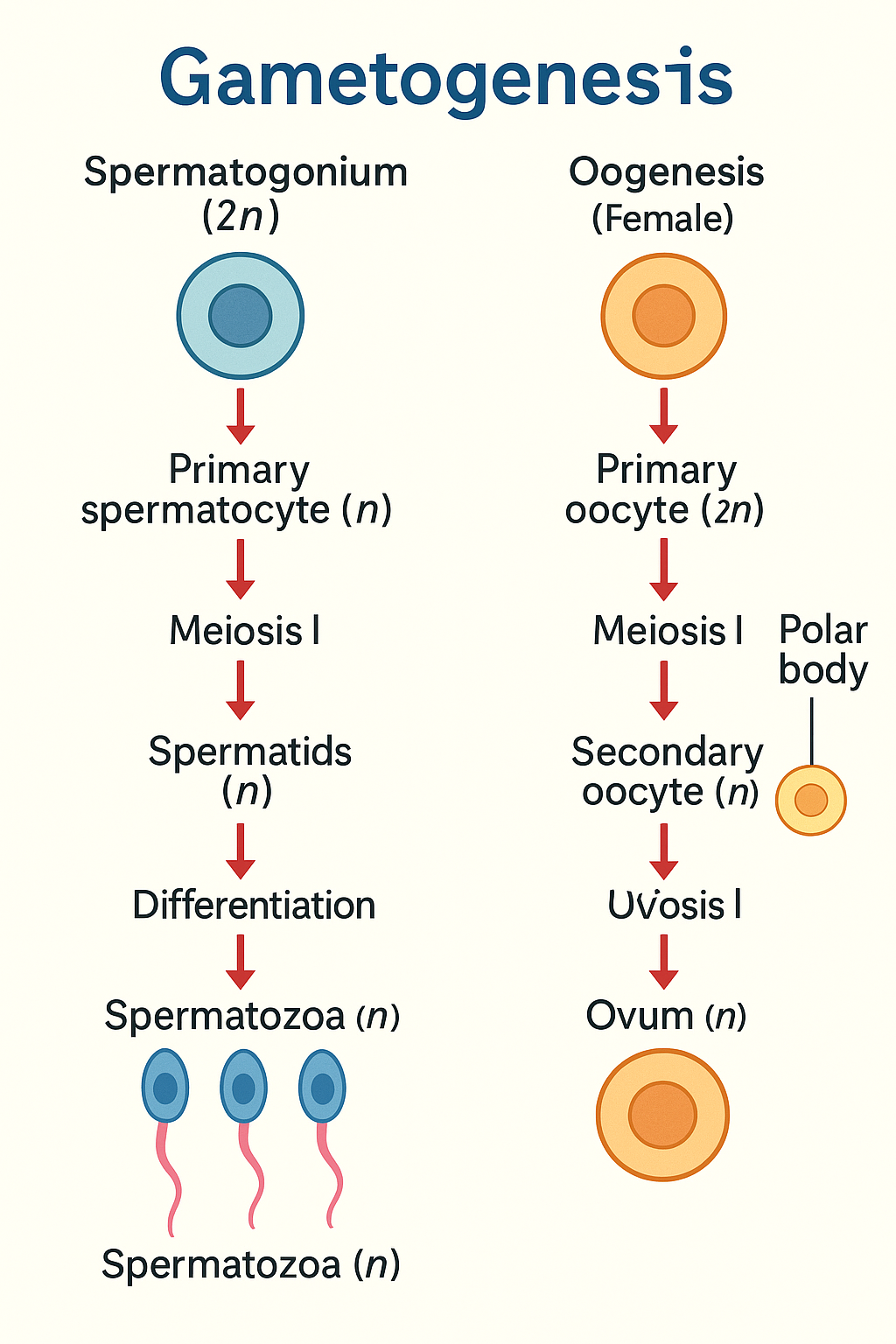
Spermatogenesis is the biological process by which sperm cells (spermatozoa) are produced in the male testes. It occurs in the seminiferous tubules and begins with diploid germ cells called spermatogonia, which undergo mitotic divisions to maintain their population. Some spermatogonia differentiate into primary spermatocytes, which enter meiosis. During the first meiotic division, each primary spermatocyte (2n) divides into two secondary spermatocytes (n), which then undergo a second meiotic division to form four haploid spermatids. These spermatids undergo a maturation process called spermiogenesis, where they develop tails, acrosomes, and other specialized structures to become fully functional spermatozoa. This continuous and highly organized process is regulated by hormones like testosterone and follicle-stimulating hormone (FSH), and it ensures the production of millions of sperm daily in healthy adult males.
2. Hormonal Regulation
The production of sperm is controlled by several hormones:
- Testosterone: Stimulates sperm production and the development of male sexual characteristics.
- Luteinizing Hormone (LH): Stimulates testosterone production.
- Follicle-Stimulating Hormone (FSH): Works with testosterone to promote spermatogenesis.
3. Ejaculation
Ejaculation occurs when sperm travel from the testes through the vas deferens, mixing with seminal fluid in the prostate and seminal vesicles, and exiting the body through the urethra.
4. Fertilization
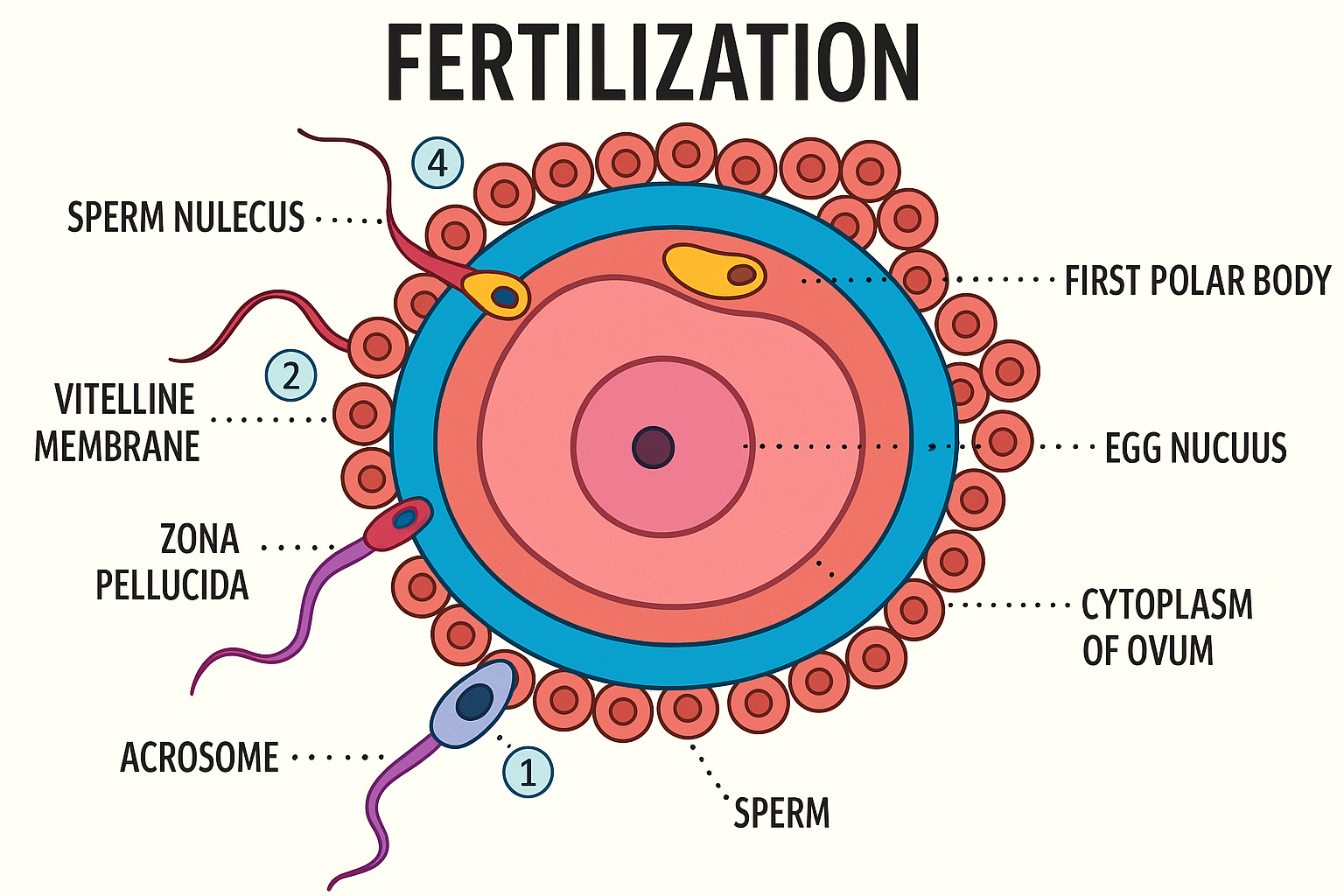
Fertilization is the process by which a male gamete (sperm) fuses with a female gamete (ovum or egg) to form a zygote, marking the beginning of a new organism. It typically occurs in the fallopian tube of the female reproductive system. During fertilization, the sperm penetrates the protective layers surrounding the ovum using enzymes released from its acrosome. Once a single sperm successfully enters the egg, the egg's membrane changes to prevent entry of other sperm, ensuring monospermy. The nuclei of the sperm and egg then fuse, combining their genetic material to form a diploid zygote (2n), which contains a complete set of chromosomes—half from each parent. This zygote undergoes rapid cell division and begins its journey toward implantation in the uterus, initiating embryonic development.
Anatomy of the Female Reproductive System
- Ovaries: The ovaries are two almond-shaped organs responsible for producing eggs (ova) and the hormones estrogen and progesterone. They are located on either side of the uterus.
- Fallopian Tubes: These tubes transport the eggs from the ovaries to the uterus. Fertilization of the egg by the sperm usually occurs here.
- Uterus: The uterus is a hollow, muscular organ where the fertilized egg implants and develops into a fetus during pregnancy. It has three parts: the fundus (top), the body (main part), and the cervix (lower part).
- Cervix: The cervix is the lower, narrow part of the uterus that connects to the vagina. It plays an important role during childbirth by dilating to allow the passage of the baby.
- Vagina: The vagina is a muscular canal that connects the uterus to the outside of the body. It serves as the passage for menstrual blood, sperm during intercourse, and the baby during childbirth.
Physiology of the Female Reproductive System
- Oogenesis: Oogenesis is the process by which female gametes (eggs) are produced in the ovaries. This process begins before birth, continues during puberty, and occurs in cycles throughout the reproductive years.
- Menstrual Cycle: The menstrual cycle lasts about 28 days, during which the body prepares for a potential pregnancy. The cycle involves several phases: the follicular phase (egg maturation), ovulation (release of the egg), the luteal phase (preparation for possible pregnancy), and menstruation (shedding of the uterine lining if no fertilization occurs).
- Hormonal Regulation: Hormones such as estrogen, progesterone, luteinizing hormone (LH), and follicle-stimulating hormone (FSH) regulate the menstrual cycle, the development of eggs, and the overall function of the reproductive system.
- Ovulation: Ovulation is the release of a mature egg from the ovary, typically occurring around the middle of the menstrual cycle. The egg travels into the fallopian tube, where it may be fertilized by sperm.
- Pregnancy: If fertilization occurs, the fertilized egg implants into the uterus, where it begins to develop into an embryo and later a fetus. Pregnancy hormones, particularly human chorionic gonadotropin (hCG), maintain the uterine lining and prevent menstruation.
Menstrual Cycle
The menstrual cycle is a natural process that occurs in the female reproductive system, typically lasting around 28 days. It is regulated by hormones and prepares the body for potential pregnancy. The cycle involves the shedding of the uterine lining (menstruation) and the maturation of an egg for fertilization. It consists of four main phases: the menstrual phase, the follicular phase, ovulation, and the luteal phase.
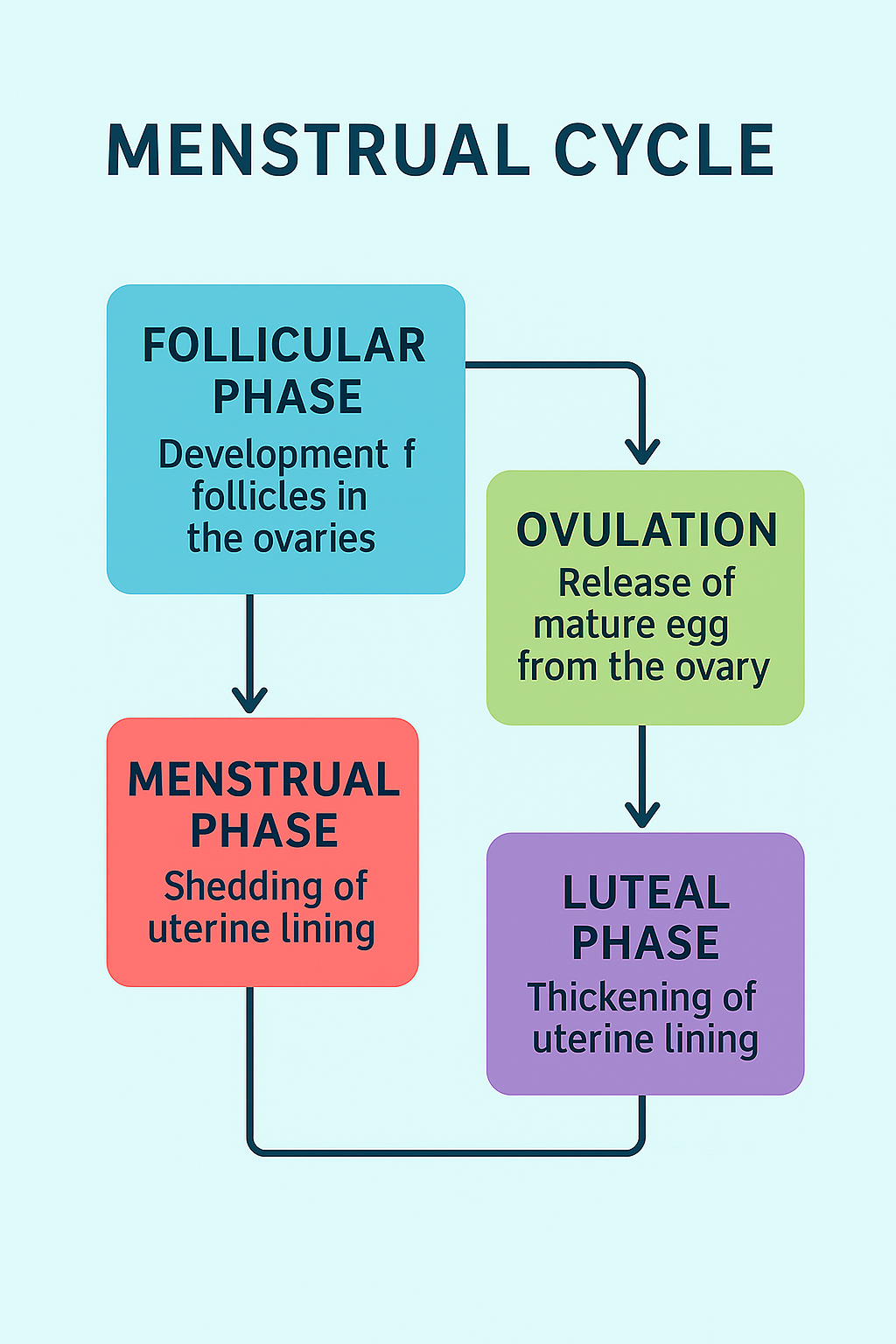
Phases of the Menstrual Cycle
- Menstrual Phase (Day 1 to 5):
This is the beginning of the menstrual cycle, where the shedding of the uterine lining (endometrium) occurs. This phase typically lasts 3-5 days. Blood, mucus, and tissue are expelled through the vagina. It is the first noticeable sign of the cycle, often referred to as the period.
- Follicular Phase (Day 1 to 13):
Starting at the same time as the menstrual phase, the follicular phase lasts until ovulation (about day 13). During this phase, the pituitary gland releases Follicle-Stimulating Hormone (FSH), which stimulates the ovaries to develop follicles, each containing an egg. Estrogen levels rise, preparing the endometrium for potential implantation. One of the follicles becomes dominant, and the others regress.
- Ovulation (Day 14):
Ovulation is the release of a mature egg from the dominant follicle in the ovary. This event typically occurs around the middle of the menstrual cycle (day 14). A surge in Luteinizing Hormone (LH) triggers ovulation, and the egg is released into the fallopian tube, where it can be fertilized by sperm. The lifespan egg is typically 12 to 24 hours, so fertilization must happen within that time frame.
- Luteal Phase (Day 15 to 28):
After ovulation, the ruptured follicle transforms into the corpus luteum, which secretes progesterone. This hormone supports the thickening of the uterine lining (endometrium) to prepare for a fertilized egg. If the egg is not fertilized, the corpus luteum degenerates, and progesterone levels drop. This triggers the shedding of the uterine lining, which marks the start of the next menstrual cycle. If fertilization occurs, the developing embryo will produce hCG (human chorionic gonadotropin), which prevents the corpus luteum from degrading, thereby maintaining the uterine lining for pregnancy.
Hormonal Regulation of the Menstrual Cycle
The menstrual cycle is regulated by a complex interaction of hormones produced by the hypothalamus, pituitary gland, and ovaries. The main hormones involved in the cycle include:
- Estrogen: Produced by the ovaries, estrogen helps in the development of the eggs and the thickening of the endometrial lining.
- Progesterone: Secreted by the corpus luteum, progesterone helps maintain the uterine lining and prepares it for the potential implantation of a fertilized egg.
- Follicle-Stimulating Hormone (FSH): Produced by the pituitary gland, FSH stimulates the maturation of follicles in the ovaries.
- Luteinizing Hormone (LH): Also produced by the pituitary gland, LH triggers ovulation (release of the egg from the follicle).
- Human Chorionic Gonadotropin (hCG): If pregnancy occurs, hCG is released by the fertilized egg and embryo, signaling the body to maintain the corpus luteum and prevent menstruation.
Phases of Human Reproduction
Phase-1. Gametogenesis
Gametogenesis is the process by which gametes (sex cells) are formed through meiosis in the reproductive organs of an organism. In males, this process is called spermatogenesis, which occurs in the testes and results in the production of sperm cells. In females, it is known as oogenesis, taking place in the ovaries and leading to the formation of egg cells (ova). Both processes begin with diploid germ cells—spermatogonia in males and oogonia in females—which undergo mitotic and meiotic divisions. In spermatogenesis, each spermatogonium eventually gives rise to four functional sperm cells. In contrast, oogenesis results in the formation of one large ovum and smaller non-functional polar bodies. Gametogenesis ensures that gametes contain only half the number of chromosomes (haploid), so that upon fertilization, the resulting zygote has a complete diploid set. This process is essential for sexual reproduction, genetic variation, and continuity of species
Phase-2. Insemination
During sexual intercourse, the male ejaculates semen into the female’s vagina. This process is called insemination. The sperm then begin their journey towards the fallopian tube.
Phase-3. Fertilization
Fertilization is the biological process in which a male gamete (sperm) and a female gamete (ovum) unite to form a zygote. This process typically takes place in the fallopian tube of the female reproductive system. During fertilization, the sperm travels through the female reproductive tract and reaches the ovum. Using enzymes from its acrosome, the sperm penetrates the egg's outer layers. Once a single sperm successfully enters the ovum, a protective reaction occurs that prevents other sperms from entering, ensuring that only one set of paternal chromosomes is contributed. The nuclei of the sperm and egg then fuse, restoring the diploid chromosome number and forming a genetically unique zygote. This zygote will undergo multiple cell divisions and eventually develop into an embryo. Fertilization marks the beginning of a new individual's life and combines genetic material from both parents, ensuring variation in the offspring.
Phase-4. Zygote Formation and Development
Zygote formation and development begin immediately after fertilization, when the male and female gametes fuse to form a single-celled diploid structure called the zygote. This zygote contains a complete set of chromosomes—half from the mother and half from the father—making it genetically unique. Shortly after formation, the zygote undergoes a series of rapid mitotic divisions known as cleavage, increasing the number of cells without increasing overall size. These divisions lead to the formation of a solid ball of cells called the morula, which later develops into a hollow structure called the blastocyst. As the blastocyst moves toward the uterus, it prepares for implantation in the uterine wall. Once implanted, it continues to grow and differentiate into various tissues and organs, eventually forming the embryo. This marks the beginning of embryonic development and the foundation for the formation of a fully developed organism.
Phase-5. Implantation
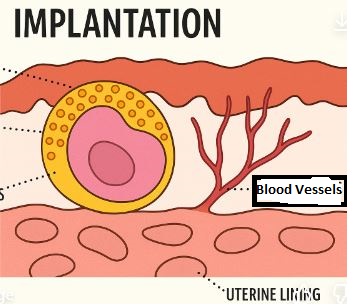
Implantation is the process by which the developing blastocyst attaches to and embeds itself into the lining of the uterus (endometrium), marking the beginning of pregnancy. It usually occurs about 6 to 7 days after fertilization. During this stage, the outer layer of the blastocyst, known as the trophoblast, secretes enzymes that help it penetrate the uterine lining. Once embedded, the trophoblast develops into the placenta, which facilitates the exchange of nutrients, oxygen, and waste between the mother and the growing embryo. Successful implantation is essential for the continuation of pregnancy, as it allows the embryo to receive nourishment and hormonal support for further development. The uterine lining thickens and becomes richly supplied with blood vessels to support the needs of the implanted embryo.
Phase-6. Embryonic Development
sEmbryonic development is the complex process by which a fertilized egg (zygote) transforms into a fully formed embryo. Following implantation in the uterine wall, the blastocyst undergoes rapid cell division and differentiation, forming three primary germ layers—ectoderm, mesoderm, and endoderm—which give rise to all the tissues and organs of the body. This stage includes critical events such as the formation of the neural tube (which becomes the brain and spinal cord), the development of the heart and circulatory system, and the early formation of limbs and sensory organs. By the end of the embryonic period, which lasts about eight weeks in humans, all major organ systems have begun to develop. The embryo is especially vulnerable during this stage, and proper nutrition and a healthy maternal environment are essential for normal growth. Embryonic development lays the foundation for the fetal stage and ultimately determines the structure and function of the body.
Phase-7. Fetal Development
Fetal development is the stage of human growth that begins after the embryonic period, starting from the ninth week of pregnancy and continuing until birth. During this stage, the structures and organs formed in the embryo undergo significant growth, maturation, and refinement. The fetus increases rapidly in size and weight, and the systems of the body—such as the nervous, respiratory, digestive, and circulatory systems—become fully functional. Facial features become distinct, limbs grow longer, and movements can be felt by the mother, especially after the second trimester. The brain develops rapidly, and by the third trimester, the fetus can respond to external stimuli like sound and light. The placenta continues to supply nutrients and oxygen while removing waste. By the end of the fetal stage, the body is prepared for life outside the womb, and fullterm birth typically occurs around the 38th to 40th week of gestation.
Phase-8. Birth
After about nine months, the fully developed fetus is delivered through the birth canal in a process called labor. Hormones trigger contractions, and the baby is born.
Family Planning and Birth Control Methods
Family planning involves the practice of controlling the number and timing of children in a family. It ensures better health for mothers and children, empowers couples to make informed reproductive decisions, and helps stabilize population growth.
Types of Birth Control Methods
-
1. Natural Methods:
These methods rely on awareness of the menstrual cycle to avoid intercourse during fertile days. They require discipline, regular tracking, and a good understanding of ovulation timing. No devices or medication are used.
- Rhythm Method: Avoiding intercourse during the fertile window based on calendar calculations.
- Withdrawal Method: The male partner withdraws the penis before ejaculation.
- Lactational Amenorrhea: Temporary method during exclusive breastfeeding in the first 6 months postpartum.
-
2. Barrier Methods:
These create a physical barrier to prevent sperm from entering the uterus. They are easy to use and some also offer protection against sexually transmitted infections (STIs).
- Male Condoms: Latex sheath worn over the penis; inexpensive and widely available.
- Female Condoms: Pouch inserted into the vagina; protects both partners.
- Diaphragms & Cervical Caps: Dome-shaped devices that cover the cervix and are used with spermicide.
-
3. Hormonal Methods:
These use hormones (estrogen and/or progestin) to prevent ovulation, thicken cervical mucus, or thin the uterine lining. They are highly effective when used correctly.
- Birth Control Pills: Daily oral tablets that prevent egg release.
- Contraceptive Injections: Hormone shots given every 1–3 months.
- Contraceptive Patches: Hormonal patches worn on the skin and replaced weekly.
- Implants: Rods inserted under the skin that release hormones for 3–5 years.
-
4. Intrauterine Devices (IUDs):
Small T-shaped devices inserted into the uterus by a doctor. They prevent fertilization by affecting sperm movement or preventing implantation.
- Copper IUD: Non-hormonal, lasts up to 10 years, prevents sperm function.
- Hormonal IUD: Releases progestin, lasts 3–7 years, also reduces menstrual flow.
-
5. Surgical Methods (Sterilization):
Permanent solutions for individuals/couples who do not wish to have children in the future. These are safe, outpatient procedures.
- Vasectomy (Male): Cutting or sealing the vas deferens to prevent sperm release.
- Tubectomy (Female): Cutting or blocking fallopian tubes to prevent egg-sperm meeting.
Comparison Table of Birth Control Methods
| Method | Description | Effectiveness | Examples |
|---|---|---|---|
| Natural | Involves fertility awareness and timing-based abstinence | 70–80% | Rhythm method, Withdrawal, Breastfeeding (LAM) |
| Barrier | Physically blocks sperm from entering the uterus | 85–98% | Male condom, Female condom, Diaphragm |
| Hormonal | Prevents ovulation or fertilization via hormonal regulation | 91–99% | Pills, Injection, Patch, Implant |
| IUD | Long-term device that prevents fertilization or implantation | 99% | Copper T, Hormonal IUD |
| Surgical | Permanently blocks sperm or egg pathways | 99.9% | Vasectomy, Tubectomy |
Benefits of Family Planning
- Reduces unplanned pregnancies and maternal mortality
- Helps parents ensure proper care and upbringing of children
- Improves women's health and career opportunities
- Supports national development by controlling population growth
Important Considerations
- Effectiveness varies by method and correct usage
- Some methods may have side effects; medical advice is recommended
- STI protection is only provided by barrier methods
- Availability and cultural factors may influence choice
TEXTBOOK QUESTION ANSWERS
- What is the importance of DNA copying in reproduction?
Answer: DNA copying, also known as DNA replication, is an essential process during reproduction because it ensures that genetic information is accurately passed from one generation to the next. Here’s why it is important:
A. Transfer of Genetic Information: DNA carries the genetic blueprint of an organism. During reproduction, DNA copying ensures that offspring inherit the same set of genes as the parent.B. Maintenance of Similarity: By accurately copying DNA, new cells or organisms develop the same characteristics as the parent, maintaining species continuity.
C. Variation for Evolution: Although DNA copying is usually accurate, small changes (mutations) may occur. These variations can lead to differences among individuals, which are essential for evolution and adaptation.
D. Cell Growth and Repair: In asexual reproduction and growth, DNA copying allows new cells to form with complete genetic information.
- Why is the variation beneficial to the species but not necessarily for the individual?
Answer: Variation is beneficial to a species but not necessarily to an individual because:
- For the species: Variations help a species adapt to changing environments. If the surroundings change (like temperature, food, or predators), some individuals with suitable variations can survive and reproduce, ensuring the survival of the species. Thus, variation increases the chances of survival of the species over a long period.
- For the individual: Variations do not always give an immediate advantage to a single organism. In some cases, a variation may even be neutral or harmful to the individual. However, if the environment changes, that variation might become useful later for survival.
Part-II
- How does binary fission differ from multiple fission?
Answer:
|
Feature |
Binary Fission |
Multiple Fission |
|
Definition |
A type of asexual reproduction in which one parent cell divides into two equal daughter cells. |
A type of asexual reproduction in which one parent cell divides into many daughter cells. |
|
Number of Offspring |
Two daughter cells are formed. |
Many daughter cells are formed at the same time. |
|
Example Organisms |
Amoeba, Paramecium, Euglena |
Plasmodium (malarial parasite), Sporozoa |
|
Process |
The nucleus divides once, followed by division of the cytoplasm (cytokinesis). |
The nucleus divides several times first, then the cytoplasm divides to form many new cells. |
|
Favourable Conditions |
Occurs in normal, favourable conditions. |
Usually occurs in unfavourable conditions; the parent forms a cyst to protect the nuclei until conditions improve. |
- How will an organism be benefited if it reproduces through spores?
Answer: An organism that reproduces through spores gains several benefits:
- Survival in Unfavourable Conditions: Spores are covered by a thick protective wall, which helps them survive extreme conditions like heat, cold, and lack of water.
- Easy Dispersal: Spores are light and tiny, so they can be easily carried by wind, water, or animals to faraway places. This helps the organism spread and colonize new areas.
- Large Number of Offspring: A single organism can produce a large number of spores, increasing the chances that some will survive and grow into new individuals.
- No Need for Gamete Fusion: Spore formation is an asexual method, so it does not require another organism for reproduction.
- Can you think of reasons why more complex organisms cannot give rise to new individuals through regeneration?
Answer: More complex organisms cannot give rise to new individuals through regeneration because of the following reasons:
- Specialization of Cells: In complex organisms (like humans, birds, or mammals), cells are highly specialized to perform specific functions (e.g., nerve cells, muscle cells). These specialized cells cannot divide and form all types of tissues, so they cannot rebuild an entire organism.
- Organ and Tissue Organization: Complex organisms have different organs and organ systems that work together in a coordinated way. Regenerating a whole organism would require the reformation of all these systems, which is too complex.
- Regeneration Limited to Repair: In higher organisms, regeneration is limited to healing or replacing damaged tissues (like skin repair or liver regeneration), not creating a completely new individual.
- Why is vegetative propagation practiced for growing some types of plants?
Answer: Vegetative propagation is practiced for growing some types of plants because of the following reasons:
- Preserves Desired Traits: The new plants are genetically identical to the parent plant. This helps preserve favourable characteristics such as taste, colour, or disease resistance (e.g., in sugarcane, rose, banana).
- Faster Reproduction: It is a quicker method than growing plants from seeds, as it bypasses the seed germination stage.
- Seedless Plant Propagation: Some plants (like banana, potato, and rose) do not produce viable seeds or produce very few. Vegetative propagation allows such plants to reproduce easily.
- Uniform Quality: Since all plants produced are clones of the parent, they maintain uniform quality and yield.
- Economical and Reliable: It is often cheaper and more dependable, especially for commercial farming and horticulture.
- Why is DNA copying an essential part of the process of reproduction?
Answer: DNA copying is essential in reproduction because it ensures the appropriate way to transfer the genetic information from parent to offspring while allowing some variation while maintaining the similarity between them.
Part-III
- How is the process of pollination different from fertilization?
Answer:
|
Feature |
Pollination |
Fertilization |
|
Definition |
The process of transfer of pollen grains from the anther (male part) to the stigma (female part) of a flower. |
The process of fusion of male and female gametes (pollen nucleus and egg cell) to form a zygote. |
|
Type of Process |
It is a physical transfer process. |
It is a biological fusion process. |
|
Involves |
Involves pollen grains, anther, and stigma. |
Involves male gamete (sperm nucleus) and female gamete (egg cell). |
|
Agents |
Occurs through agents like wind, water, insects, or animals. |
No external agents are required; it occurs inside the ovule. |
|
Result |
Leads to the arrival of pollen on the stigma. |
Leads to the formation of a zygote which develops into an embryo and then a seed. |
- What is the role of the seminal vesicles and the prostate gland?
Answer: Seminal vesicles assist in the lubrication of sperms and providing of a fluid medium for the easy transportation through the male reproductive organs. They do so with the help of secretions from the seminal vesicles and the prostate gland. These secretions also provide nutrients in the form of fructose, calcium and some enzymes.
- What are the changes seen in girls at the time of puberty?
Answer: Following are the changes seen in girls at the time of puberty:
- Hair growth appears in genital area.
- Hair growth in other areas like underarms, face, hands and legs.
- The size of uterus and ovary increases.
- The size of the breast increases followed by darkening of the nipple skin that is present at the tip of the breast.
- Beginning of menstrual cycle.
- Appearance of pimples, as there is more oil secretion from the skin.
- How does the embryo get nourishment inside the mother’s body?
Answer: The nourishment of baby inside the uterus is taken care by the placenta. The placenta develops between the uterine wall of the mother and the embryo (foetus). It contains villi (finger-like projections) that increase the surface area for the exchange of materials. The mother’s blood provides oxygen and nutrients (like glucose, amino acids, and vitamins) to the embryo through the placenta. The wastes (like carbon dioxide and urea) from the embryo pass back to the mother’s blood for removal. The umbilical cord connects the embryo to the placenta, acting as a transport channel for food, oxygen, and wastes.
- If a woman is using a Copper-T, will it help in protecting her from sexually transmitted diseases?
Answer: No, unlike condoms, the usage of copper-T cannot stop the contact of body fluids between male and female reproductive organs. Hence, it cannot protect her from getting sexually transmitted diseases.
TEXTBOOK EXERCISES
- Asexual reproduction takes place through budding in
(a) Amoeba
(b) Yeast
(c) Plasmodium
(d) Leishmania
Answer: (b) Yeast. Yeast is an example for asexual reproduction taking place through budding. A small protuberance is produced on the parent cell that grows in full size forming a bud. In the parent cell, the daughter nucleus splits and migrates to the daughter cell. By forming a constriction, the bud detaches from the mother’s body at the base. This process of budding continues to form a chain of bud cells. The mother cell is smaller than the daughter cell.
- Which of the following is not a part of the female reproductive system in human beings?
(a) Ovary
(b) Uterus
(c) Vas deferens
(d) Fallopian tube
Answer:(c) Vas deferens. Vas deferens is a part of the male reproductive system. It is a long, muscular tube travelling from the epididymis into the pelvic cavity. It is behind the bladder. Its function is to transport the mature sperm to the urethra. It also carries urine to the outside of the body.
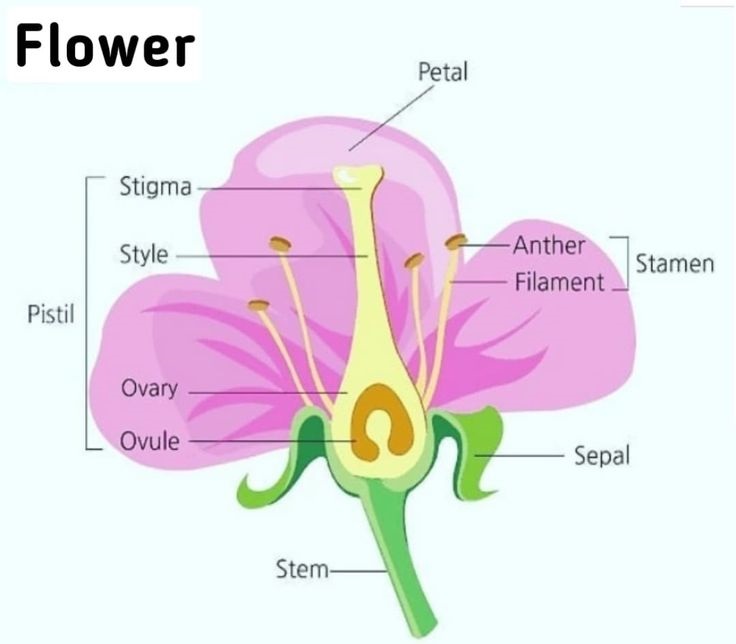
- The anther contains
(a) Sepals
(b) Ovules
(c) Pistil
(d) Pollen grains
Answer: (d) Pollen grains. As the pollen grains are the microscopic particles that occurs in the pollen giving rise to male gametophyte of a seed plant.
- What are the advantages of sexual reproduction over asexual reproduction?
Answer: Following are the advantages of sexual reproduction:
- The offspring has the characters of both the parents.
- The survival of the species is ensured as there are more variations.
- The offspring can easily adapt to environmental changes.
- It also improves the health of humans.
- What are the functions performed by the testis in human beings?
Answer: Apart from the production of sperms, testes produces the male hormone known as androgens- testosterone, which is responsible for secondary sexual characters in boys.
- Why does menstruation occur?
Answer:Menstruation occurs because the egg released by the ovary is not fertilized. Every month, the uterus prepares itself to receive a fertilized egg by forming a thick, soft lining rich in blood vessels. This lining provides nutrients for the possible growth of an embryo. If the egg is not fertilized, it does not form a . The thick lining of the uterus is no longer needed which leads to shedding of egg along with the uterine lining, this process is called menstruation. It usually occurs once every 28 days and lasts for 3–5 days.
- Draw a labelled diagram of the longitudinal section of a flower.
Solution:
- What are the different methods of contraception?
Answer: Contraception refers to methods used to prevent pregnancy. There are several types of contraception, broadly divided into natural, barrier, chemical, hormonal, and surgical methods.
A. Natural Methods such as abstinence or avoiding sexual intercourse completely Rhythm/Calendar Method: Avoiding intercourse during the fertile period of the menstrual cycle Withdrawal Method: Male withdraws the penis before ejaculation to prevent sperm from entering the vagina.
B. Barrier Methods prevent sperm from reaching the egg. Examples: Condoms (male and female) – prevent sperm entry and also protect against sexually transmitted diseases (STDs). Diaphragm or cervical cap – placed over the cervix to block sperm.
C. Chemical Methods with the use of spermicides (creams, gels, or foams) that kill or immobilize sperm. Often used along with barrier methods for better effectiveness.
D. Hormonal Methods regulate female hormones to prevent ovulation or implantation. Some examples are; Oral contraceptive pills (daily intake of hormones), Contraceptive patches (applied to skin), Injectable contraceptives (hormone injections every few months) and Vaginal rings (hormone-releasing rings placed in the vagina).
E. Intrauterine Devices (IUDs) are the small devices inserted into the uterus to prevent implantation of a fertilized egg. Can be copper IUDs (non-hormonal) or hormonal IUDs.
F. Surgical Methods (Permanent) Vasectomy (male sterilization): Cutting or blocking the vas deferens to prevent sperm release. Tubectomy (female sterilization): Cutting or blocking the fallopian tubes to prevent eggs from reaching the uterus.
- How are the modes for reproduction different in unicellular and multicellular organisms?
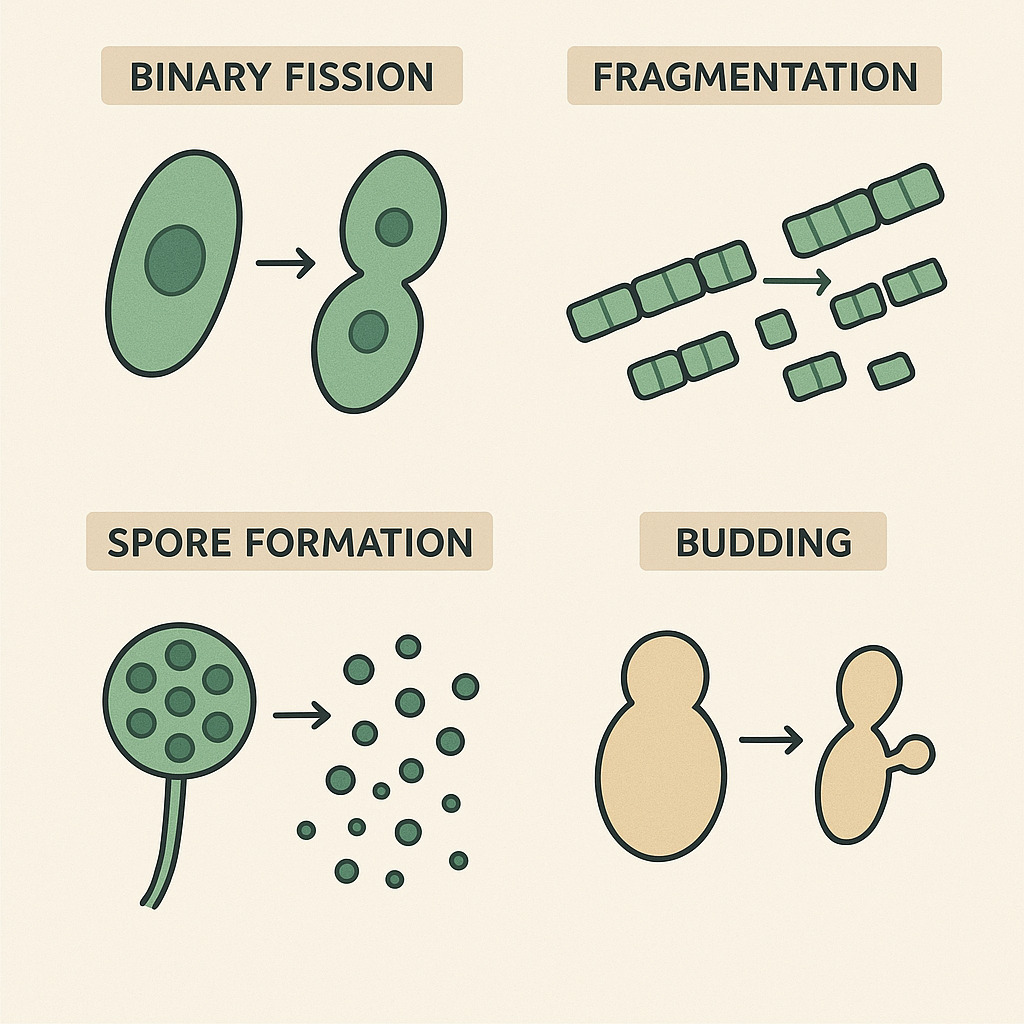
Answer: The different modes of reproduction in unicellular organisms are fission, budding, etc. Here, the cell divides into two daughter cells and this process of cell division continues. Whereas, in multicellular organisms there is a different organ system for reproduction. The different modes of reproduction in multicellular organisms are vegetative propagation, spore formation, etc.In more complex organisms like humans and animals, reproduction is through sexual reproduction.
- How does reproduction help in providing stability to populations of species?
Answer: Reproduction is the process of producing the same kind of species by the existing species. This is done so as to maintain the population of that species and also to take forward their species to the next generations. Stability is maintained by keeping a check of rate of births and rate of deaths.
- What could be the reason for adopting contraceptive methods?
Answer: People adopt contraceptive methods for several important reasons, they are :
- To Prevent Unplanned Pregnancies
- To control the number of children in a family and space out pregnancies for the health of the mother and child.
- Proper spacing reduces health risks to both mother and child during pregnancy and childbirth.
- Control Population Growth
- Prevent Sexually Transmitted Diseases (STDs): Certain contraceptive methods, like condoms, also reduce the risk of HIV, syphilis, and other STDs.
- Smaller, planned families are easier to provide for financially and give better opportunities for education and development to children.
How organisms do reproduce? LBA ( Lesson Bassed Assessment)
Learning points
- Reproduction and the importance of Variation.
- Types of asexual reproduction : fission, budding , Fragmentation, Regeneration,
- Spore formation, vegetative reproduction.
- Sexual reproduction in flowering plants .
- Sexual reproduction in Male and female - Structure and function.
- What happens when egg is not fertilized?
- What happens when egg is fertilized ?
- Reproductive health.
- Sexually transmitted diseases.
- Methods of contraception.
I. Multiple Choice Questions (With Answers)
1) The group of organisms that reproduce through fission only is:
A. Amoeba, Hydra, Spirogyra
B. Leishmania, Amoeba, Yeast
C. Amoeba, Plasmodium, Planaria
D. Plasmodium, Amoeba, Leishmania
Answer: D – Plasmodium, Amoeba, Leishmania
2) In the given figure of Cotyledon the parts labeled as A and B respectively are:
A. Fruit, Shoot
B. Primary shoot, Primary root
C. Secondary root, Primary shoot
D. Bud, Leaf
Answer: B – Primary shoot, Primary root
3) The type of reproduction found in Spirogyra is:
A. Budding
B. Fragmentation
C. Vegetative reproduction
D. Spore formation
Answer: B – Fragmentation in Spirogyra
4) The common passage for both sperms and urine in human male reproductive system is:
A. Urethra
B. Ureter
C. Vas deferens
D. Urinary bladder
Answer: A – Urethra
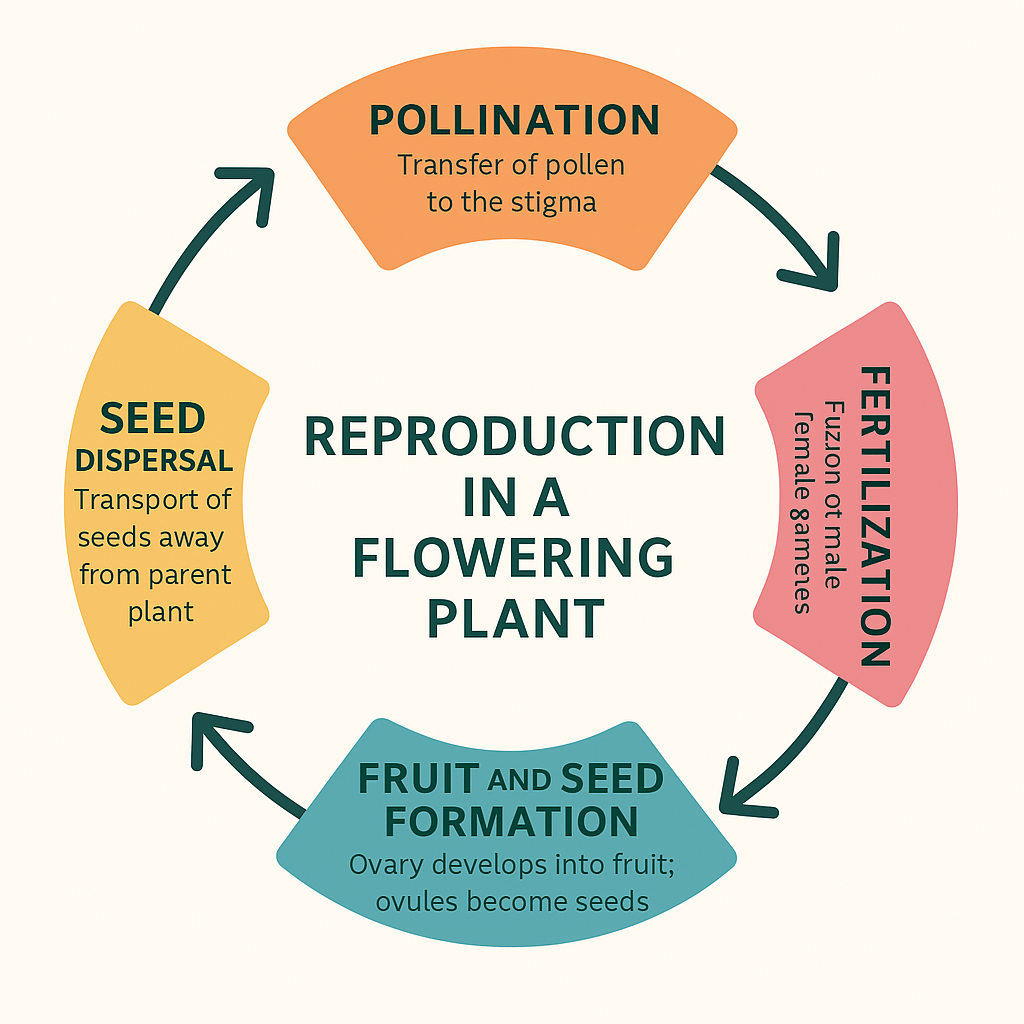
5) The correct sequence in sexual reproduction in a flower is:
A. Pollination → Fertilization → Seed → Embryo
B. Seed → Embryo → Fertilization → Pollination
C. Embryo → Seed → Pollination → Fertilization
D. Pollination → Fertilization → Embryo → Seed
Answer: D
6) In the human female reproductive system, the egg is carried from ovary to uterus through:
A. Cervix
B. Fallopian tube
C. Placenta
D. Vagina
Answer: B – Fallopian tube
7) A common bacterial infection that spreads through sexual contact in humans is:
A. Gonorrhoea
B. AIDS
C. Hepatitis-B
D. Warts
Answer: A – Gonorrhoea
8) In humans, a sexually transmitted viral infection is:
A. AIDS
B. Syphilis
C. Tuberculosis
D. Gonorrhoea
Answer: A – AIDS
9) The parts that develop into fruit and seed in a flower respectively are:
A. Stamen and Ovary
B. Ovule and Ovary
C. Ovary and Ovule
D. Stamen and Ovule
Answer: C – Ovary and Ovule
10) In humans, the testes are located outside the abdomen in the scrotum because:
A. To protect from mechanical shocks
B. To increase sperm production
C. To maintain secretion of testosterone
D. To maintain the temperature required for sperm production
Answer: D
11) The biological process shown in the diagram is:
A. Fragmentation
B. Multiple fission
C. Regeneration
D. Vegetative propagation
Answer: B – Multiple fission (as in Plasmodium)
12) The correct order of binary fission in Leishmania is:
A. II, III, IV, I
B. I, III, IV, II
C. IV, I, III, II
D. III, I, II, IV
Answer: C
13) AIDS : Virus :: Warts :
A. Bacteria
B. Fungus
C. Protozoan
D. Virus
Answer: D – Both are caused by viruses
14) Part of flower that develops into fruit and part of the seed that develops into root respectively are:
A. Ovary and Plumule
B. Plumule and Radicle
C. Ovary and Radicle
D. Ovary and Ovule
Answer: C – Ovary and Radicle
15) The process that occurs in the production of new individuals of Planaria is:
A. Binary fission
B. Regeneration
C. Budding
D. Fragmentation
Answer: B – Regeneration in Planaria
16) The embryo gets nutrition from the mother’s blood with the help of special part called:
A. Fallopian tube
B. Ovary
C. Uterus
D. Placenta
Answer: D – Placenta
17) Observe the structures of the female reproductive system shown in Figure-A and Figure-B. The correct statement is:
- Fertilization possible in both
B. Fertilization possible only in Figure-B
C. Fertilization possible only in Figure-A
D. Fertilization not possible in both
Answer: C – Fertilization possible only in Figure-A (Normal reproductive structure)
One Mark Question Answers
18) Write two examples for the organisms that reproduce by binary fission.
Answer: Amoeba and Leishmania.
19) Is self-pollination possible in flowers that have only stamens? Justify your answer.
Answer: No. Self-pollination is not possible because such flowers lack a pistil (female reproductive part).
20) What function do the testicles perform in humans?
Answer: Testicles produce sperms and secrete the hormone testosterone.
21) Sexual reproduction causes more variation in organisms. Why?
Answer: Because it involves fusion of gametes from two parents, leading to mixing and recombination of genes.
22) Among the flowers A and B which flower undergoes self-pollination?
Answer: The flower that has both stamen and pistil (bisexual flower) undergoes self-pollination.
23) What is sexual reproduction?
Answer: Sexual reproduction is the process in which male and female gametes fuse to form a zygote.
24) Name any two viral infections that are transmitted through unprotected sexual contact.
Answer: AIDS and Hepatitis B.
25) If a woman uses Copper-T, will it help protect her from sexually transmitted diseases?
Answer: No. Copper-T prevents pregnancy but does not protect against sexually transmitted diseases.
26) Sex determination at birth should not be done. Justify this statement.
Answer: It should not be done because it can lead to gender discrimination and female feticide.
Two Mark Questions with Answers
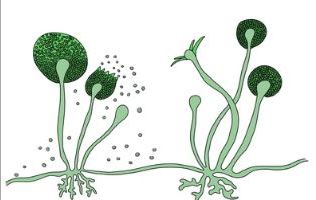
27) Growth of thread-like structures along with gradual spoilage of tomato is observed when kept for four days. Interpret the cause.
Answer: The thread-like structures are fungal hyphae.Fungi such as Rhizopus grow on moist food by spore formation, leading to spoilage of the tomato
28) Why does menstruation occur?
Answer:If the egg is not fertilized, the thickened lining of the uterus breaks down.
This lining, along with blood and mucus, is shed through the vagina as menstruation.
29) How does the uterus prepare to receive a fertilized egg? What happens if the egg is not fertilized?
Answer:The inner lining of the uterus thickens and becomes rich in blood vessels to receive the fertilized egg.If fertilization does not occur, the uterine lining breaks down and is shed as menstruation.
30) How is budding in Hydra different from budding in Bryophyllum?
Answer:In Hydra, a bud develops from the body surface and grows into a new individual.
In Bryophyllum, buds develop from the margins of leaves and grow into new plants.
31) How do germ cells receive half the amount of DNA? What is the need for this process?
Answer:Germ cells undergo meiosis, a special type of cell division that halves the chromosome number.
This is necessary to maintain the normal chromosome number after fertilization.
32) Draw a diagram showing germination of pollen on stigma and label the parts.
Answer:(Diagram should include the following labeled parts:)
- Pollen grain
- Stigma
- Style
- Pollen tube
- Ovary
- Ovule
(Student should draw a neat labeled diagram.)
33) Explain the stages in which a fertilized egg develops into an embryo.
Answer:After fertilization, the zygote undergoes repeated cell divisions.
It forms a ball of cells and develops into an embryo.
The embryo gets implanted in the uterus for further development.
34) How can pregnancy be prevented using surgical methods of contraception?
Answer:In males, vasectomy is done by cutting and tying the vas deferens.
In females, tubectomy is done by cutting and tying the fallopian tubes.
These methods prevent the meeting of sperms and eggs.
35) Is surgical contraception better than physical contraception?
Answer:Yes. Surgical contraception is more effective and permanent.
Physical methods like condoms are temporary and require proper use each time.
36) How is pollination different from fertilization?
Answer:Pollination is the transfer of pollen grains from anther to stigma.
Fertilization is the fusion of male and female gametes to form a zygote.
IV. Three Mark Answers
37) Position of testis, testosterone secretion and prostate gland secretion are supplementary to reproductive fertility. Explain.
Answer:(a) Testes are located in the scrotum outside the abdomen to maintain a temperature 2–3°C lower than body temperature, which is essential for sperm production.
(b) Testosterone hormone controls sperm formation and development of male secondary sexual characters.
(c) Prostate gland secretes fluid that nourishes and activates sperms, helping in their movement.
Thus, all three functions support male reproductive fertility.
38) What is pollination? What changes occur in the flower after pollination?
Answer:Pollination is the transfer of pollen grains from the anther to the stigma of a flower.
After pollination:
• Pollen tube develops.
• Fertilization occurs.
• Ovary develops into fruit.
• Ovule develops into seed.
39) Justify the following:
- a) Sexual reproduction leads to more variations.
It involves fusion of gametes from two parents, resulting in genetic recombination and variation. - b) Placenta plays a significant role in development of foetus.
Placenta supplies oxygen and nutrients to the foetus and removes waste materials from its blood.
40) How is reproduction different in Hydra and Planaria?
Answer:Hydra reproduces by budding. A small outgrowth develops on the body and detaches as a new individual. Planaria reproduces by regeneration. If cut into pieces, each piece develops into a complete organism.
41) How does a fertilized egg develop into an embryo? How does it get nourishment?
Answer:After fertilization, the zygote undergoes repeated cell divisions forming an embryo.
The embryo gets implanted in the uterus.It receives nourishment from the mother through the placenta, which transfers nutrients and oxygen.
42) Advantages of sexual reproduction over asexual reproduction.
Answer:
- Produces genetic variation
• Better adaptability to environment
• Increases survival of species
43) Spirogyra and Planaria – Are the methods similar?
Answer:Spirogyra reproduces by fragmentation. Planaria reproduces by regeneration. The methods are different because fragmentation is breaking into pieces, while regeneration involves regrowth of body parts.
44) Distinguish between self and cross pollination.
Answer:Self-pollination:
• Occurs within the same flower or same plant.
• Less variation produced.
Cross-pollination:
• Occurs between flowers of different plants of same species.
• Produces more variation.
45) Changes after fertilization in a flower.
Answer:
- Ovary develops into fruit
• Ovule develops into seed
• Petals, sepals and stamens dry and fall off
46) How can a student verify whether an organism reproduces through spores?
Answer:
The student can observe under a microscope for sporangia (spore sacs).
For example, Rhizopus shows spore formation.
Presence of spores confirms spore reproduction.
47) What is DNA replication? How do chromosomes rearrange in sexual reproduction?
Answer:DNA replication is the process of copying DNA before cell division.
In sexual reproduction:
• Meiosis halves chromosome number in gametes.
• Fertilization restores the original chromosome number.
48) What is placenta? State its function. Why are testicles located outside abdomen?
Answer:Placenta is a disc-like organ connecting mother and foetus.
Functions:
• Supplies oxygen and nutrients
• Removes waste materials
• Secretes hormones
Testicles are located in the scrotum to maintain lower temperature required for sperm production.
V. Four Mark Answers
49) Explain the functions of male reproductive system.
Answer:
- Testes – Produce sperms and testosterone
• Scrotum – Maintains proper temperature
• Vas deferens – Transports sperms
• Prostate gland – Secretes nourishing fluid
• Penis – Transfers sperms into female body
50) Reaching sexual maturity is necessary in mammals. Justify.
Answer:
Sexual maturity leads to development of reproductive organs.
Gametes are produced only after puberty.
Hormonal changes enable reproduction.
Without sexual maturity, reproduction is not possible.
51) Structure and function of female reproductive system.
Answer:
- Ovaries – Produce ova and hormones
• Fallopian tubes – Site of fertilization
• Uterus – Development of embryo
• Cervix – Connects uterus to vagina
• Vagina – Birth canal
52) Placenta plays an important role in development of foetus. Justify.
Answer:
- Placenta connects foetus to mother.
- Provides nutrients and oxygen.
- Removes waste products.
- Secretes hormones necessary for pregnancy.
Thus, it is essential for foetal development.
53) Advantages of vegetative reproduction. How is it useful to farmers?
Answer:Advantages:
• Fast method of reproduction
• Produces identical plants
• Maintains desirable traits
Useful to farmers because:
• Ensures uniform crop quality
• Faster yield
• Used in crops like sugarcane, potato, banana