Chapter 2. The Invisible Living World: Beyond Our Naked Eye
Introduction
The world around us is filled with tiny living organisms that cannot be seen with the naked eye. These organisms are called microorganisms or microbes. They are present everywhere — in air, water, soil, food, and even inside the human body. Although they are invisible without special instruments, they play an important role in nature and human life. The invention of the microscope helped scientists discover this hidden living world.
Microscope
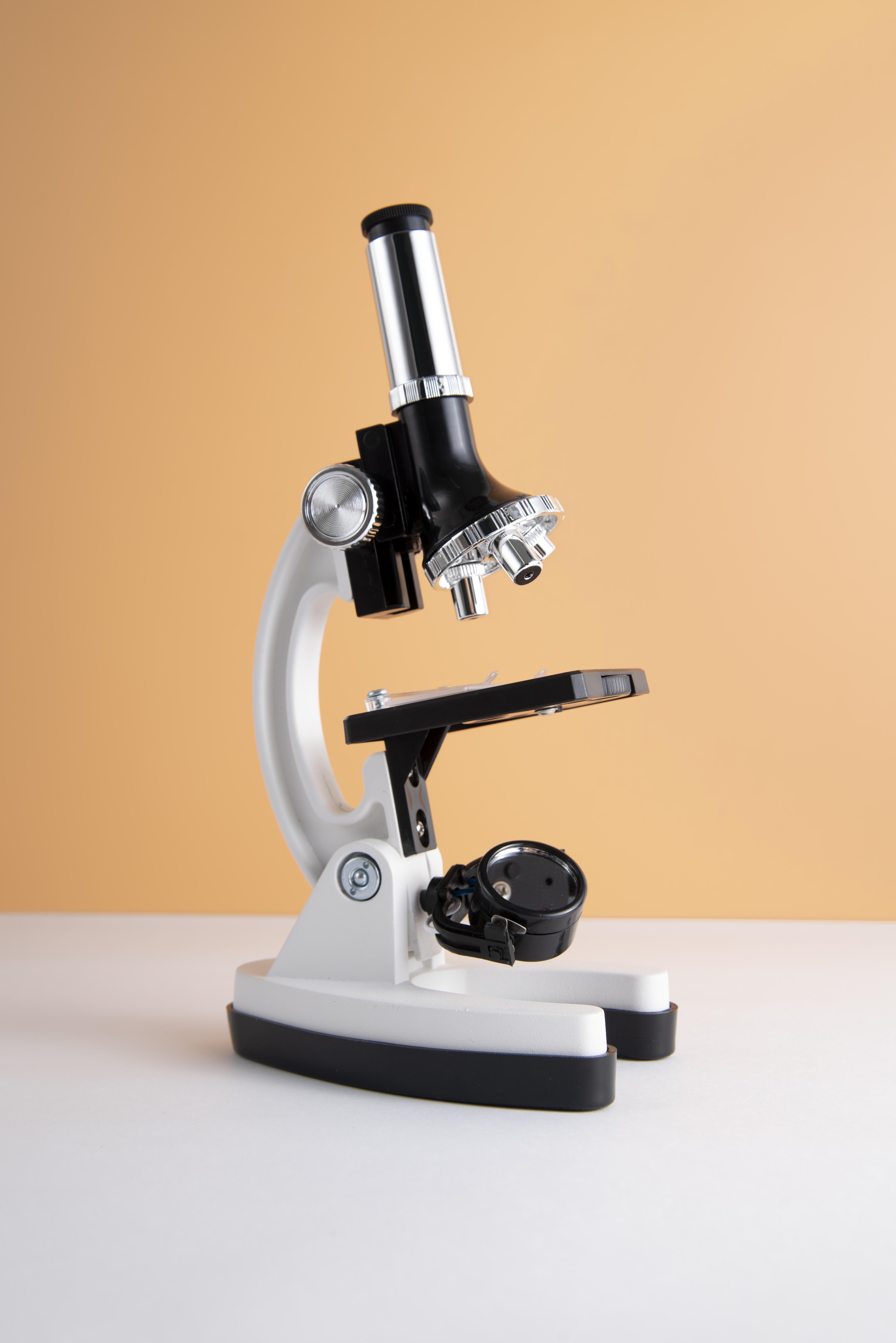
A microscope is an instrument used to observe objects that are too small to be seen with the naked eye, such as cells and microorganisms. It works by magnifying tiny objects, making them visible and easier to study. Microscopes are widely used in science and biology to examine cell structure and understand how living organisms function. A simple type, the foldscope, is a low-cost, portable microscope that allows basic observation of microscopic life. Advanced instruments like the electron microscope can magnify objects up to 10,00,000 times and reveal detailed internal structures of cells that cannot be seen with ordinary microscopes.
Microorganisms (Microbes)
Microorganisms are extremely small living organisms that can only be seen using a microscope.
Characteristics of Microorganisms
1. Very Tiny in Size
Microorganisms are so small that they cannot be seen with naked eyes.
Example: Bacteria in curd can only be seen under a microscope.
2. Found Everywhere
Microorganisms live in almost every environment on Earth. They are found in soil, water, air, human body , hot springs and icy regions etc. Example: Bacteria are present in soil and inside our digestive system.
3. Some are Useful while others are Harmful
Useful microorganisms help in making curd and bread They also help in making medicines like antibiotics . Decompose dead plants and animals . Harmful Microorganisms cause diseases in humans, animals, and plants Example: Virus causes common cold and flu.
4. Reproduce Quickly
Many microorganisms multiply very fast under suitable conditions. Example: Bacteria can increase rapidly in spoiled food.
5. Microorganisms can survive in different environments such as Very hot places , Very cold regions , Salty water and inside living organisms Example: Some bacteria survive in hot springs.
Examples of Microorganisms
- Bacteria: Single-celled microorganisms found almost everywhere (soil, water, air, and inside living organisms). Example: Lactobacillus (helps convert milk into curd), E. coli (found in intestines)
- Viruses: Very tiny infectious agents that can reproduce only inside the living cells of a host organism. Example: Coronavirus, Influenza virus
- Fungi: Organisms that mostly grow on dead and decaying matter; some are useful while others cause diseases. Example: Yeast (used in baking and fermentation), bread mold (Rhizopus)
- Protozoa: Single-celled organisms, often found in water or as parasites in animals and humans.
Example: Amoeba, Plasmodium (causes malaria) - Algae: Simple plant-like organisms that usually live in water and can make their own food using sunlight. Example: Chlorella, Spirogyra
Microbes in daily life
A. Food Spoilage
Microbes grow on leftover food and cause cotton-like or powdery growth on its surface. This microbial activity leads to the decay and spoilage of food, making it unsafe to eat.
B.Role in Environment
Microorganisms play an important role in the environment by breaking down waste through decomposition. They convert organic waste into manure and recycle nutrients back into the soil. For example, fruit peels turn into manure, dry leaves enrich the soil with nutrients, and dead animals are naturally decomposed by microbes.
C. Biogas Production
Microorganisms also produce biogas when they break down waste in the absence of oxygen. The main gas produced is methane. Biogas is used for cooking, heating, electricity generation, and as fuel for vehicles, making it an important renewable energy source.
D. Microbes in Food Production
Fermentation (Yeast)
Yeast is a type of fungus that feeds on sugar in warm conditions. During this process, it produces carbon dioxide, which makes dough rise and become fluffy, and alcohol, which gives a distinct smell. This process is commonly used in making bread and cakes.
Lactobacillus (Bacteria)
Lactobacillus is a bacterium used in the formation of curd. It converts milk sugar (lactose) into lactic acid and grows best in warm conditions. It is also used in preparing foods like curd, idli, and dosa batter.
Rhizobium (Nitrogen Fixation)
Rhizobium bacteria live in the root nodules of legume plants. They convert atmospheric nitrogen into a form that plants can use, thereby improving soil fertility naturally and reducing the need for chemical fertilizers.
Microalgae
Microalgae are microscopic plant-like organisms that perform photosynthesis and produce a large amount of oxygen. They play an important role in maintaining ecological balance. Microalgae are important as they serve as food for aquatic animals, produce oxygen, and are used in medicines and biofuels. They also help in water purification. A well-known example is Spirulina, which is a high-protein “superfood” rich in Vitamin B12 and very low in fat and sugar. However, microalgae face threats such as pollution, climate change, and habitat destruction, which can affect their survival and ecological role.
Decomposition
Decomposition by microorganisms requires suitable conditions such as moisture and an appropriate temperature. These conditions help microbes grow and break down organic matter effectively.
Discovery of Microorganisms
The discovery of microorganisms unfolded in the 17th century through the invention of early microscopes, transforming our understanding of biology and medicine
The Pioneers of Microbiology
- Robert Hooke (1665): Using an early compound microscope, Hooke examined the fruiting bodies of molds and became the first person to describe and publish drawings of microorganisms.
- Antoine van Leeuwenhoek (1674–1677): A Dutch textile merchant who is widely celebrated as the "father of microbiology". He crafted powerful single-lens microscopes and became the first to observe, describe, and record single-celled organisms, which he called "animalcules.
- Louis Pasteur (1860s): Through his famous "swan-necked flask" experiments, Pasteur proved that microorganisms in the air caused fermentation and putrefaction. By sterilizing broths and preventing microbes from entering, he conclusively disproved spontaneous generation.
CELL – The Basic Unit of Life
A cell is the basic structural and functional unit of all living organisms. All living beings are made up of one or more cells.
Structure of cell
Most cells have three main parts. They are cell membrane, cytoplasm, and nucleus.
- Cell Membrane
- Thin outer covering of the cell
- Encloses cytoplasm and nucleus
- Controls entry and exit of substances
- Separates one cell from another
- Cytoplasm
- Jelly-like substance between cell membrane and nucleus
- Contains nutrients like carbohydrates, proteins, fats, and salts
- Site where most life processes occur
- Nucleus
- Round, central structure covered by a membrane
- Controls all cell activities
- Responsible for growth and reproduction
Additional components in Plant Cells:
Cell Wall
- Rigid outer layer (present only in plants, fungi, bacteria)
- Provides shape, strength, and support
- Makes plant cells firm and rectangular
Plant Cell Special Structures
- Plastids are exclusively present in plant cells . Tghere are many types of plastids however, most important among them are Chloroplasts and leucoplasts .Chloroplasts contain chlorophyll; help in photosynthesis. Leucoplasts tore food in non-green parts of plants
- Vacuole- Large central sac in plant cells helps to store water, nutrients, and waste . Vacuoles also maintains cell shape to provide support and rigidity. In animal cells, vacuoles are small or absent.
Functions of Cell Parts
|
Part |
Function |
|
Cell membrane |
Controls movement of substances in and out |
|
Cytoplasm |
Site of most chemical activities |
|
Nucleus |
Controls growth and cell functions |
|
Cell wall (plants) |
Provides strength and structure |
|
Vacuole (plants) |
Stores substances and maintains shape |
Specialized Cell Types
Specialized cells are cells that are adapted to perform specific functions in the body. Their shape and structure are closely related to the job they perform.
Animal Cells (Examples): Cheek cells are flat and thin in shape. They form a protective lining on the inner surface of the mouth and help protect underlying tissues from damage and infection.
Nerve cells (neurons) are long and highly branched cells. They carry messages throughout the body in the form of electrical signals, helping in quick communication between different parts of the body. Muscle cells are spindle-shaped and flexible. They contract and relax to produce movement and help in the functioning of organs such as the food pipe, heart, and limbs. Red blood cells (RBCs) are disc-shaped and help in transporting oxygen from the lungs to all parts of the body and carrying carbon dioxide back to the lungs. White blood cells (WBCs) are irregular in shape and form an important part of the immune system. They protect the body by fighting infections and harmful microorganisms. Skin cells are tightly packed and form the outer protective layer of the body. They help protect against injury, water loss, and entry of germs.
Plant Cells
Plant cells can have different shapes such as rectangular, oval, or tube-like depending on their function. Some plant cells are specially modified to form long tubes that help in the transport of water and nutrients throughout the plant. The structure of plant cells varies according to the role they perform in different parts of the plant.
Digestive System & Cell Cooperation
|
Location |
Cell Type |
Function |
|
Food pipe |
Muscle cells |
Push food using wave-like movement |
|
Stomach wall |
Muscle cells |
Churn food |
|
Stomach lining |
Gland cells |
Produce digestive juices |
Biological organization of life
Hierarchy in Living Organisms
Cell → Tissue → Organ → Organ System → Organism
Definitions
- Cell: Basic unit of life
- Tissue: Group of similar cells working together
- Organ: Group of tissues performing a function
- Organ system: Group of organs working together
- Organism: Complete living being
Multicellular Organisms Begin as a single cell (zygote/egg) , cells divide repeatedly form complex living beings Examples: Humans, animals, plants
Cell Theory
Cell theory is a fundamental principle in biology that explains the relationship between cells and living organisms. It was proposed by scientists Matthias Schleiden, Theodor Schwann, and later expanded by Rudolf Virchow. The theory states that all living organisms are made up of one or more cells, meaning the cell is the basic building block of life. It also explains that the cell is the basic structural and functional unit of life, because all life processes such as growth, respiration, and reproduction take place inside cells. Another important idea is that all new cells arise from pre-existing cells, which means cells do not appear spontaneously but are produced by the division of existing cells.
Textbook Question Answers
Question 1. Have you ever wondered what you might see if the invisible world around you became visible?
Answer: Yes, it would be fascinating to see the microorganisms like bacteria, fungi, protozoa, and viruses that are constantly interacting with our environment and even inside our bodies. It would change how we perceive cleanliness, health, and the complexity of ecosystems around us.
Question 2.How do you think your observation of this hidden world might change the way you think about size, complexity, or even what counts as ‘living’?
Answer: Observing this hidden world would reveal that even microscopic organisms exhibit complex behaviors such as movement, reproduction, response to stimuli, and forming colonies. This would deepen our understanding of what qualifies as a living being and show that size does not limit the complexity of life.
Question 3.Have you thought about how these tiny living beings interact with each other?
Answer: Yes, microorganisms constantly interact; some live symbiotically, while others compete for resources or prey on one another. For example, bacteria can help in digestion or cause diseases, and fungi can decompose organic matter, enriching the soil. These interactions form the foundation of many ecological processes.
(Pages 25-26)
Question 1.Various parts of a cell are given below. Write them in the appropriate places in the following diagram.
- Nucleus
- Cytoplasm
- Chloroplast
- Cell wall
- Cell membrane
- Nucleoid
Answer:
- Nucleus: Present in plant and animal cells (not in bacterial cells), controls the cell’s activities.
- Cytoplasm: Jelly-like substance that fills the cell and contains all organelles.
- Chloroplast: Found only in plant cells, responsible for photosynthesis.
- Cell wall: Found in plant and bacterial cells, forms the outermost layer.
- Cell membrane: Found in all cells, located inside the cell wall in plant/bacterial cells or as the outer layer in animal cells.
- Nucleoid: Found only in bacterial cells; the region where DNA is located since bacteria don’t have a true nucleus.
Question 2. Aanandi took two test tubes and marked them A and B. She put two spoonfuls of sugar solution in each of the test tubes. In test tube B, she added a spoonful of yeast. Then she attached two incompletely inflated balloons to the mouth of each test tube. She kept the setup in a warm place, away from sunlight.
(i) What do you predict will happen after 3-4 days? She observed that the balloon attached to test tube B was inflated. What can be a possible explanation for this?
(a) Water evaporated in test tube B and filled the balloon with the water vapour.
(b) The warm atmosphere expanded the air inside test tube B, which inflated the balloon.
(c) Yeast produced a gas inside test tube B, which inflated the balloon.
(d) Sugar reacted with warm air, which produced gas, eventually inflating the balloon.
(ii) She took another test tube, 1/4 filled with lime water. She removed the balloon from test tube B in such a manner that the gas inside the balloon did not escape. She attached the balloon to the test tube with lime water and shook it well. What do you think she wants to find out?
Answer:
(i) (c) Yeast produced a gas inside the test tube B, which inflated the balloon.
Explanation: The yeast fermented the sugar, releasing carbon dioxide gas (CO2), which inflated the balloon.
(ii) She wants to test whether the gas produced is carbon dioxide (CO2). If the lime water turns milky, it confirms the presence of CO2, because CO2 reacts with lime water to form calcium carbonate.
Question 3.A farmer was planting wheat crops in his field. He added nitrogen-rich fertiliser to the soil to get a good yield of crops. In the neighbouring field, another farmer was growing bean crops, but she preferred not to add nitrogen fertiliser to get healthy crops. Can you think of the reasons?
Answer:
Beans are leguminous crops that form a symbiotic relationship with Rhizobium bacteria present in their root nodules. These bacteria fix nitrogen from the atmosphere into the soil, providing a natural source of nitrogen. Therefore, the second farmer does not need to add nitrogen-rich fertiliser.
Question 4. Snehal dug two pits, A and B, in her garden. In pit A, she put fruit and vegetable peels and mixed them with dried leaves. In pit B, she dumped the same kind of waste without mixing it with dried leaves. She covered both the pits with soil and observed after 3 weeks. What is she trying to test?
Answer: She is trying to test the effectiveness of composting.
- In Pit A, the mixture of green waste (fruit/vegetable peels) and dry leaves provides the correct carbon-nitrogen balance needed for decomposition.
- Pit B lacks this balance and will decompose more slowly and may smell. This experiment shows that decomposing agents like microorganisms work better when both carbon-rich and nitrogen-rich materials are present.
Question 5. Identify the following micro-organisms:
(i) I live in every kind of environment, and inside your gut.
(ii) I make bread and cakes soft and fluffy.
(iii) I live in the roots of pulse crops and provide nutrients for their growth.
Answer:
(i) Bacteria
(ii) Yeast
(iii) Rhizobium
Question 6. Devise an experiment to test that microorganisms need optimal temperature, air, and moisture for their growth.
Answer: Set up 3 bread slices:
- Slice A: Warm, moist environment (near sink)
- Slice B: Dry environment (sealed container)
- Slice C: Cold environment (refrigerator)
After 3 days, observe: Slice A will have maximum microbial (fungal) growth.
Conclusion: Microorganisms grow best when temperature, moisture, and air are optimal.
Question 7. Take 2 slices of bread. Place one slice on a plate near the sink. Place the other slice inthe refrigerator. Compare after three days. Note your observations. Give reasons for yourobservations.
Answer:
- A bread slice near the sink will show fungal growth (mold).
- Slices in the refrigerator will likely have no or slower growth.
Reason: Warm and moist conditions near the sink promote microbial growth, while cold temperatures in the refrigerator inhibit it.
Question 8. A student observes that when curd is left out for a day, it becomes more sour. What are two possible explanations for this observation?
Answer:
- Microorganisms (lactic acid bacteria) continue to grow and multiply, producing more lactic acid, which makes the curd more sour.
- Warmer temperature speeds up bacterial activity, increasing acid production and sourness.
Question 9. Observe the set-up given in Figure and answer the following questions.
(i) What happens to the sugar solution in flask A?
(ii) What do you observe in test tube B after four hours? Why do you think this happened?
(in) What would happen if yeast were not added to flask A?
Answer:
(i) The yeast ferments the sugar in the warm solution, producing carbon dioxide gas and a small amount of alcohol.
(ii) Lime water in test tube B turns milky. This happens because CO2 produced in flask A travels through the delivery tube into flask B and reacts with lime water, confirming the presence of carbon dioxide.
(iii) Fermentation would not occur, so no carbon dioxide would be produced. As a result, lime water would remain clear in test tube B.