Control and coordination
Take the QuizAll living organisms respond to changes in their environment. These changes, called stimuli, can include light, sound, temperature, touch, smell, or any other external or internal condition. To survive and function efficiently, organisms must sense these stimuli and respond appropriately. This is where control and coordination come into play. Control refers to how different parts of the body are directed or regulated, while coordination ensures that all body systems work together smoothly and harmoniously. In plants, control and coordination happen through hormones and growth responses, such as bending toward light (phototropism). In animals, especially in humans, these processes are more complex and involve the nervous system and endocrine system. Together, these systems help organisms to react quickly or gradually, depending on the need.
Why Do Organisms Need Control and Coordination?
Living organisms constantly interact with their surroundings. To survive, they must detect and respond to changes, known as stimuli. Control and coordination are essential for the following reasons:
- To Respond to Stimuli: Organisms need to respond to environmental changes such as light, sound, and temperature to protect themselves and survive.
- To Maintain Internal Stability (Homeostasis): Body systems work together to keep internal conditions stable, such as temperature and water balance.
- To Perform Complex Functions Smoothly: Activities like movement, digestion, and respiration require multiple organs to work in harmony.
- To Communicate Between Body Parts: The nervous and endocrine systems coordinate internal signals to regulate body functions efficiently.
- For Proper Growth and Development: Hormones ensure that growth, reproduction, and metabolism happen in a controlled and timely manner.
Mechanism of Control and Coordination in Organisms
Control and coordination help organisms respond to stimuli and maintain internal balance. The mechanisms differ in animals and plants:
1. In Animals:
- Nervous System: Includes the brain, spinal cord, and nerves. It detects, processes, and responds to stimuli through electrical signals.
- Endocrine System: Glands release hormones into the bloodstream to regulate growth, metabolism, and long-term activities.
2. In Plants:
- Plants use chemical coordination through hormones like auxins and gibberellins.
- They show directional responses like phototropism (toward light) and gravitropism (toward gravity).
Together, these systems ensure proper functioning, survival, and adaptation of organisms in changing environments.
Nervous system
The human nervous system is a complex network of nerves and cells that carry messages to and from the brain and spinal cord to various parts of the body. It helps us sense our surroundings, process information, and respond appropriately.
Key Function: The nervous system acts as the body’s communication system, coordinating actions and sensory information by transmitting signals throughout the body.Main Parts of the Nervous System
- Central Nervous System (CNS) – includes the brain and spinal cord.
- Peripheral Nervous System (PNS) – includes all the nerves that branch out from the CNS to the rest of the body.
Importance of the Nervous System
Without the nervous system, humans would not be able to think, feel, move, or react to the environment. It is essential for survival and functions in harmony with other systems such as the endocrine system for control and coordination. The human brain contains over 86 billion neurons – specialized cells that transmit information through electrical and chemical signals!
Components of the Human Nervous System
The human nervous system is divided into two major parts, each with its own components and functions:
1. Central Nervous System (CNS)
- Brain: The control center of the body. It processes information and coordinates actions, thoughts, and emotions.The human brain is a complex and highly organized organ that serves as the control center of the nervous system. It is responsible for regulating all bodily functions, including movement sensation, thought, memory, and emotions Protected by the skull and cushioned by cerebrospinal fluid, the brain is divided into major parts: the cerebrum which handles higher cognitive functions; the cerebellum, which coordinate movement and balance; and the brainstem, which controls vital functions like breathing and heartbeat Composed of billions of neurons and supporting cells, the brain communicates through electrica and chemical signals, making it the most powerfu and intricate organ in the human body.
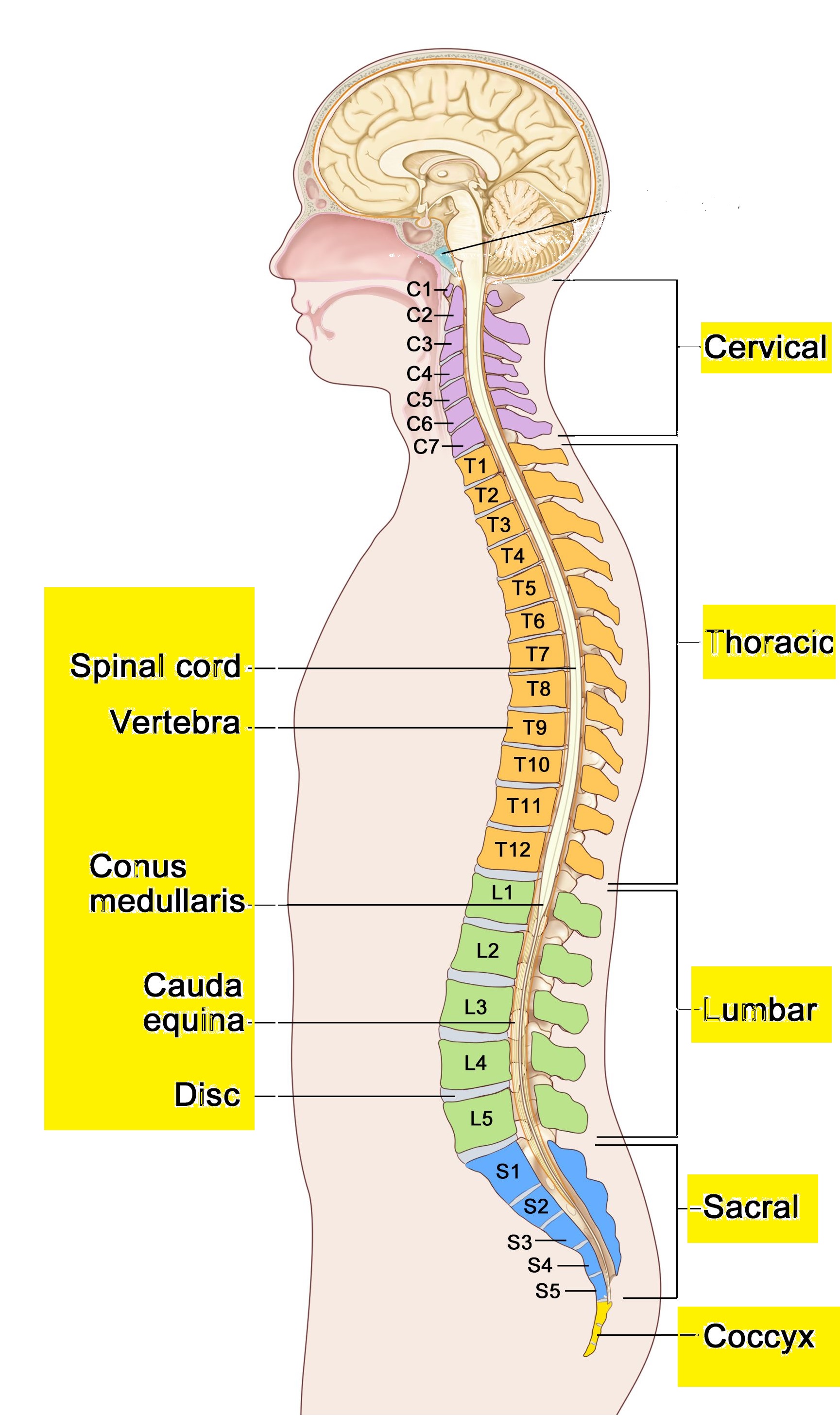
- Spinal Cord: A long, thin structure that extends from the brain It transmits messages between the brain and the rest of the body.The spinal cord is a long cylindrical structure made up of nervous tissue tha extends from the brainstem down through the vertebral column It acts as a communication highway between the brain and th rest of the body, transmitting nerve impulses that control movement and sensation. The spinal cord is divided into 31 segments, each giving rise to a pair of spinal nerves These segments are grouped into five regions: cervical (8 segments), thoracic (12), lumbar (5), sacral (5), and coccygeal (1). Each segment i responsible for supplying nerves to specific parts o the body, ensuring coordinated functioning and reflex responses.
2. Peripheral Nervous System (PNS)
- Cranial Nerves: Nerves that arise directly from the brain. They control senses and facial movements.
- Spinal Nerves: Nerves that arise from the spinal cord. They carry signals to and from different parts of the body.
- Somatic Nervous System: The somatic nervous system is a part of the peripheral nervous system responsible for voluntary control of body movements through the action of skeletal muscles. It consists of sensory (afferent) nerves that carry information from sensory organs to the central nervous system, and motor (efferent) nerves tha transmit signals from the brain and spinal cord to muscles. This system allow conscious control over activities like walking, talking, and writing, and it also plays a role in reflex actions that occur without conscious thought. The somatic nervous system is essential for interacting with the external environment through controlled and purposeful movements.
- Autonomic Nervous System: Controls involuntary activities (e.g., heartbeat, digestion). It has two parts:
- Sympathetic: Prepares the body for action (fight or flight).
- Parasympathetic: Calms the body down (rest and digest).
Central Nervous System (CNS)
The Central Nervous System (CNS) is the processing center of the body’s nervous system. It includes the brain and the spinal cord. The CNS integrates information it receives from, and coordinates the activity of, all parts of the body.
- Brain
- Spinal Cord
1. Brain
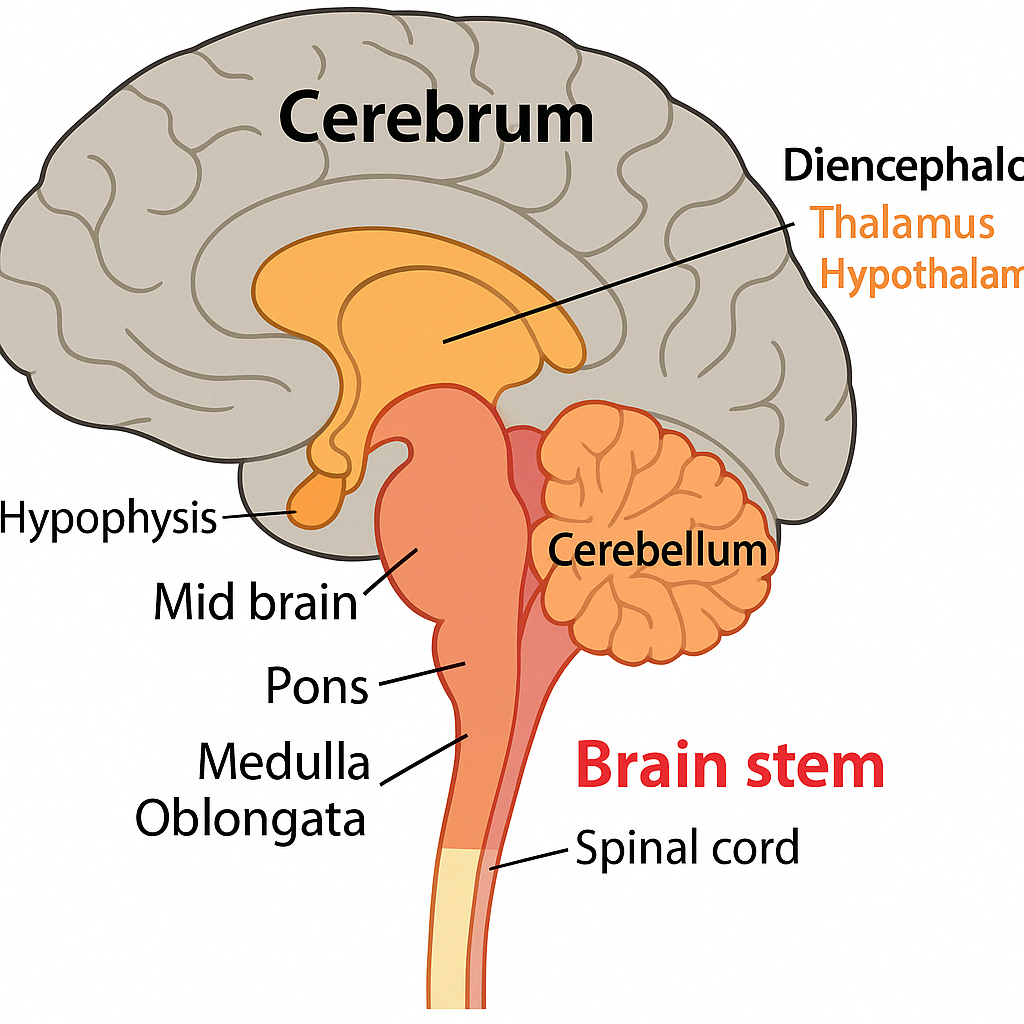
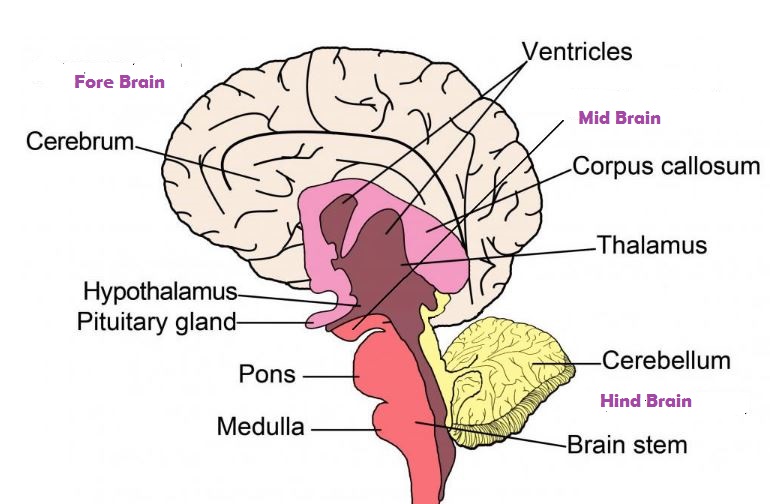
The brain is the control center of the body. Our brain is a highly intricate and sophisticated organ composed of three main regions: the cerebrum, cerebellum, and brainstem, each with distinct structures and functions. The cerebrum is the largest part, divided into two hemispheres (right and left) and further into lobes—frontal, parietal, temporal, and occipital—each responsible for various higher-order functions like reasoning, memory, emotions, and voluntary muscle movement. The cerebral cortex, the outer layer of the cerebrum, is made of gray matter and is involved in consciousness, thinking, and perception. Beneath it lies the white matter, which facilitates communication between different brain regions. The cerebellum, located under the cerebrum, coordinates balance, posture, and fine motor skills. The brainstem, which connects the brain to the spinal cord, comprises the midbrain, pons, and medulla oblongata and is responsible for vital life functions such as heart rate, breathing, and reflexes. Inside the brain are also important structures like the thalamus, which relays sensory information, and the hypothalamus, which controls body temperature, hunger, and hormonal regulation through the pituitary gland. The brain is protected by the skull, surrounded by cerebrospinal fluid, and covered by three protective membranes called meninges, ensuring its safety and optimal functioning. It is protected by the skull and surrounded by cerebrospinal fluid.
- Cerebrum: Responsible for voluntary actions, intelligence, memory, and emotions.
- Cerebellum: Maintains posture and balance, and coordinates body movements.
- Medulla Oblongata: Controls involuntary functions like heartbeat, breathing, etc.
2. Spinal Cord
The spinal cord is a cylindrical structure extending from the brain stem. It transmits neural signals between the brain and the rest of the body and handles reflex actions.
Comparison Table
| Brain | Spinal Cord |
|---|---|
| Located in the skull | Extends from the brainstem down the vertebral column |
| Controls complex thoughts and actions | Controls reflexes and conducts messages |
| Composed of cerebrum, cerebellum, medulla | Composed of nerve tracts and grey matter |
Functions of the CNS
- Integration and processing of sensory information
- Decision-making and memory formation
- Controlling both voluntary and involuntary activities
Structure of the Human Brain
The human brain is the command center of the nervous system, responsible for controlling and coordinatin all bodily functions, sensations, emotions, thoughts, and movements. It is protected b the skull and cushioned by cerebrospinal fluid (CSF).
Detailed Anatomy of Skull Bones
The human skull is a complex bony structure that forms the head. It protects the brain houses the sense organs (eyes, ears, nose), and supports the facial structure. The skull consists of 22 bones (excluding the middle ear bones) that are joined together by immovable joints called sutures.
Major Divisions of the Skull
style="width: 100%; max-width: 700px; height: auto;">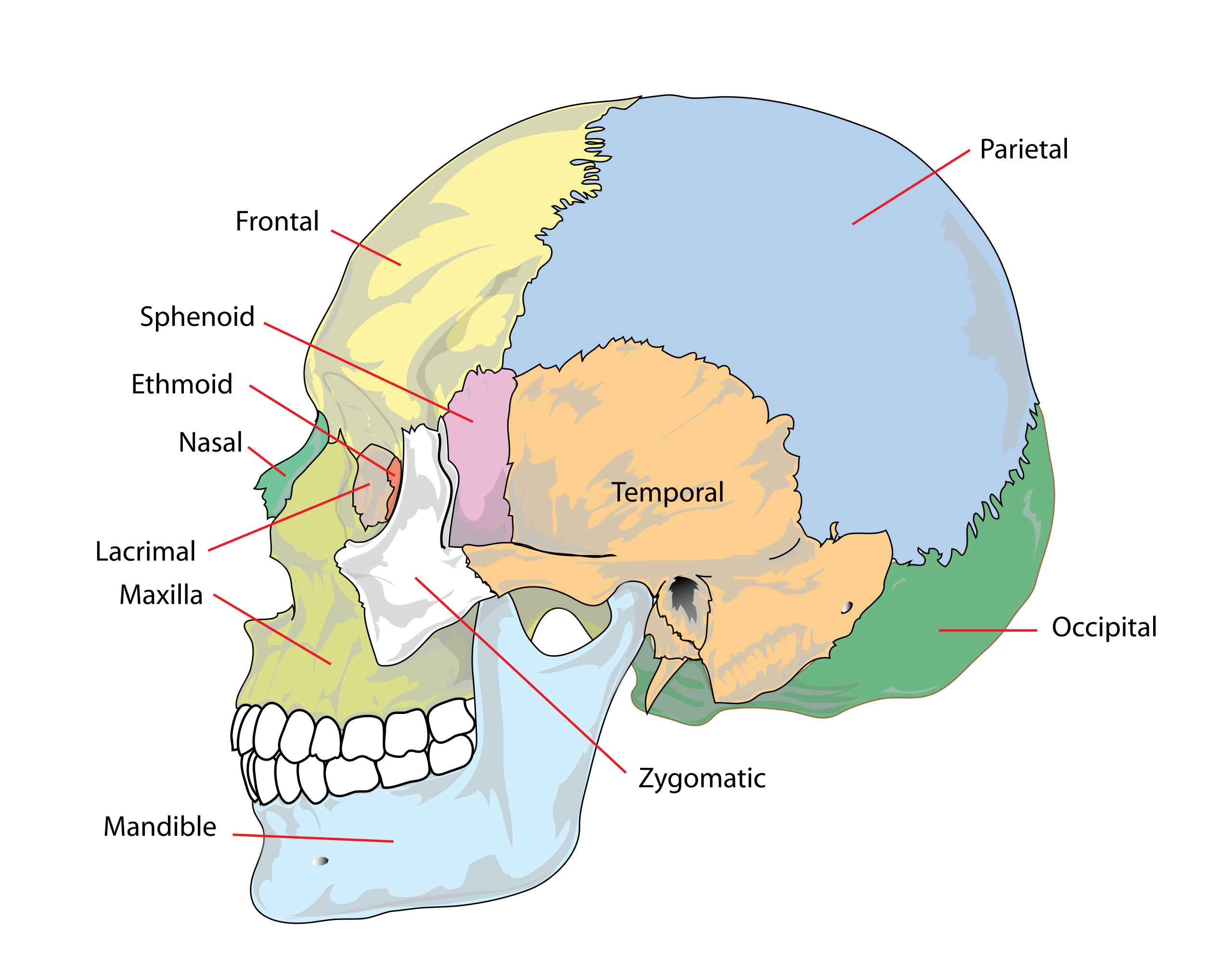
- Cranial Bones (8): Form the protective case around the brain
- Facial Bones (14): Shape the face and support structures such as the eyes, nose, and mouth
Cranial Bones (8)
| Bone | Location | Function |
|---|---|---|
| Frontal | Forehead and upper part of eye sockets | Protects the frontal lobe; gives shape to the face |
| Parietal | Upper sides and roof of the skull | Protects the top and sides of the brain |
| Temporal | Lower sides of the skull (near ears) | Protects the temporal lobes; contains ear structures |
| Occipital | Back and base of the skull | Contains the foramen magnum through which the spinal cord exits |
| Sphenoid | Middle of the skull base, butterfly-shaped | Connects cranial bones; supports brain from below |
| Ethmoid | Between the eyes, part of the nasal cavity | Contributes to nasal septum and eye socket |
Facial Bones (14)
| Bone | Location | Function |
|---|---|---|
| Mandible | Lower jaw (only movable skull bone) | Supports lower teeth; aids in chewing and speech |
| Maxilla (2 in number) | Upper jaw and part of eye sockets | Holds upper teeth and forms facial structure |
| Zygomatic(2 in number) | Cheekbones | Forms cheeks and part of the eye socket |
| Nasal(2 in number) | Bridge of the nose | Supports nasal cartilage |
| Lacrimal(2 in number) | Inner corner of the eye sockets | Contains tear ducts |
| Palatine (2 in number) | Back part of the hard palate | Forms part of nasal cavity and oral roof |
| Inferior Nasal Conchae (2 in number) | Inside the nasal cavity | Helps filter and humidify air |
| Vomer | Bottom part of the nasal septum | Divides the nasal cavity |
Key Openings and Features of the Skull
- Foramen Magnum: Large hole in occipital bone for spinal cord
- Orbit: Eye socket formed by 7 bones
- Nasal Cavity: Divided by the vomer and ethmoid bone
- Sutures: Immovable joints connecting skull bones (e.g., coronal, sagittal, lambdoid)
- Forebrain: Cerebrum, Thalamus, Hypothalamus
- Midbrain: Upper part of brainstem
- Hindbrain: Cerebellum, Pons Varolii, Medulla Oblongata
1. Cerebrum
The largest part of the brain, divide into left and right hemispheres It has ridges (gyri) and grooves (sulci) to increase surface area for neuron connections. The cerebrum is involved i intelligence, memory, language, and voluntar actions.
Lobes of the Cerebrum
| Lobe | Main Functions |
|---|---|
| Frontal Lobe | Decision-making, speech (Broca's area), voluntary movement, personality |
| Parietal Lobe | Perception of touch, pressure, temperature, spatial awareness |
| Temporal Lobe | Hearing, memory, language comprehension (Wernicke's area) |
| Occipital Lobe | Visual processing, interpreting colors and shapes |
2. Thalamus
Acts as a relay center for sensory information (except smell) and directs it to the appropriate regions of the cerebrum.
3. Hypothalamus
Located just below the thalamus, it maintains homeostasis by regulating temperature, thirst, hunger, sleep, emotions, and controls the pituitary gland.
4. Cerebellum
Located beneath the cerebrum at the back of the brain. It coordinates voluntary movements like posture, balance, coordination, and speech. It helps in smooth and balanced muscular activity.
5. Brainstem
The brainstem connects the brain to the spinal cord and manages vital involuntary functions like breathing and heart rate.
Parts of Brainstem:
- Midbrain: Controls visual and auditory reflexes.
- Pons Varolii: Connects cerebellum with cerebrum, helps in respiration control.
- Medulla Oblongata: Controls heartbeat, breathing, swallowing, blood pressure.
6. Functional Areas (Brain Centers)
| Brain Center | Location | Function |
|---|---|---|
| Motor Cortex | Frontal Lobe | Controls voluntary movements |
| Somatosensory Cortex | Parietal Lobe | Processes body sensations |
| Visual Cortex | Occipital Lobe | Processes visual inputs |
| Auditory Cortex | Temporal Lobe | Processes sound signals |
| Broca’s Area | Left Frontal Lobe | Responsible for speech production |
| Wernicke’s Area | Left Temporal Lobe | Responsible for language comprehension |
- Skull: Bony protection
- Meninges: Three membranes covering the brain (dura mater, arachnoid, pia mater)
- Cerebrospinal Fluid (CSF): Shock absorber and nutrient carrier
Reflex Arc and Neuromuscular Junction
1. Reflex Arc
A reflex arc is the neural pathway that controls a reflex action. It allows the body to respond rapidly to stimuli without conscious brain involvement. Reflexes are crucial for survival, helping the body react to pain or danger instantly.
Pathway of Reflex Arc
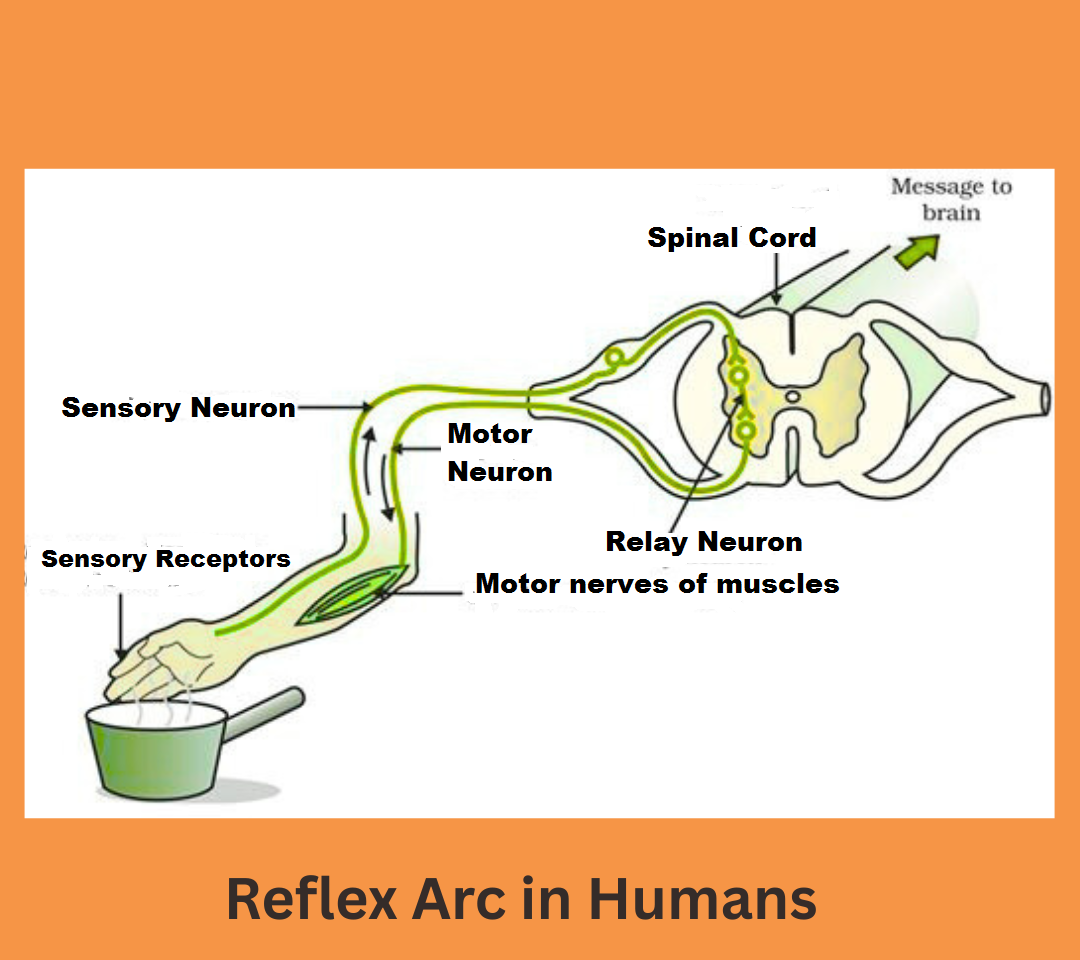
- Stimulus: Detected by sensory receptors (e.g., touching a hot object)
- Sensory Neuron: Carries the signal to the spinal cord
- Interneuron: Processes the information in the spinal cord
- Motor Neuron: Sends response signal to the effector organ
- Effector: Muscle or gland responds (e.g., hand withdraws quickly)
Types of Reflexes
- Simple Reflex: Involves only one sensory and one motor neuron (e.g., knee-jerk reflex)
- Conditioned Reflex: Learned response to a stimulus (e.g., salivating at the sound of a bell in Pavlov's experiment)
2. Neuromuscular Junction
The neuromuscular junction (NMJ) is the synapse between a motor neuron and a skeletal muscle fiber. It is responsible for converting the electrical signal from the neuron into a chemical signal that triggers muscle contraction.
- Motor Neuron Terminal: End of a nerve fiber that carries electrical impulse
- Synaptic Cleft: The tiny gap between the neuron and muscle fiber
- Motor End Plate: Specialized region on the muscle fiber membrane
Steps in Muscle Activation
- Nerve impulse reaches the axon terminal of the motor neuron
- Calcium ions enter and trigger the release of acetylcholine (ACh) into the synaptic cleft
- ACh binds to receptors on the motor end plate of the muscle
- This generates an electrical impulse in the muscle membrane
- The impulse spreads, leading to muscle contraction
Function: Transmits signals across the synaptic cleft to initiate muscle contraction.
Importance of NMJ
- Essential for voluntary movement
- Site of action for toxins (e.g., botulinum toxin) and some drugs (e.g., curare)
- Malfunction can cause neuromuscular diseases like Myasthenia Gravis
Structure of a Neuron (Nerve Cell)
A neuron is the fundamental unit of the nervous system. It is a highly specialized cell responsible for receiving, processing, and transmitting electrical and chemical signals throughout the body. Neurons do not divide and have a long lifespan.
Main Parts of a Neuron
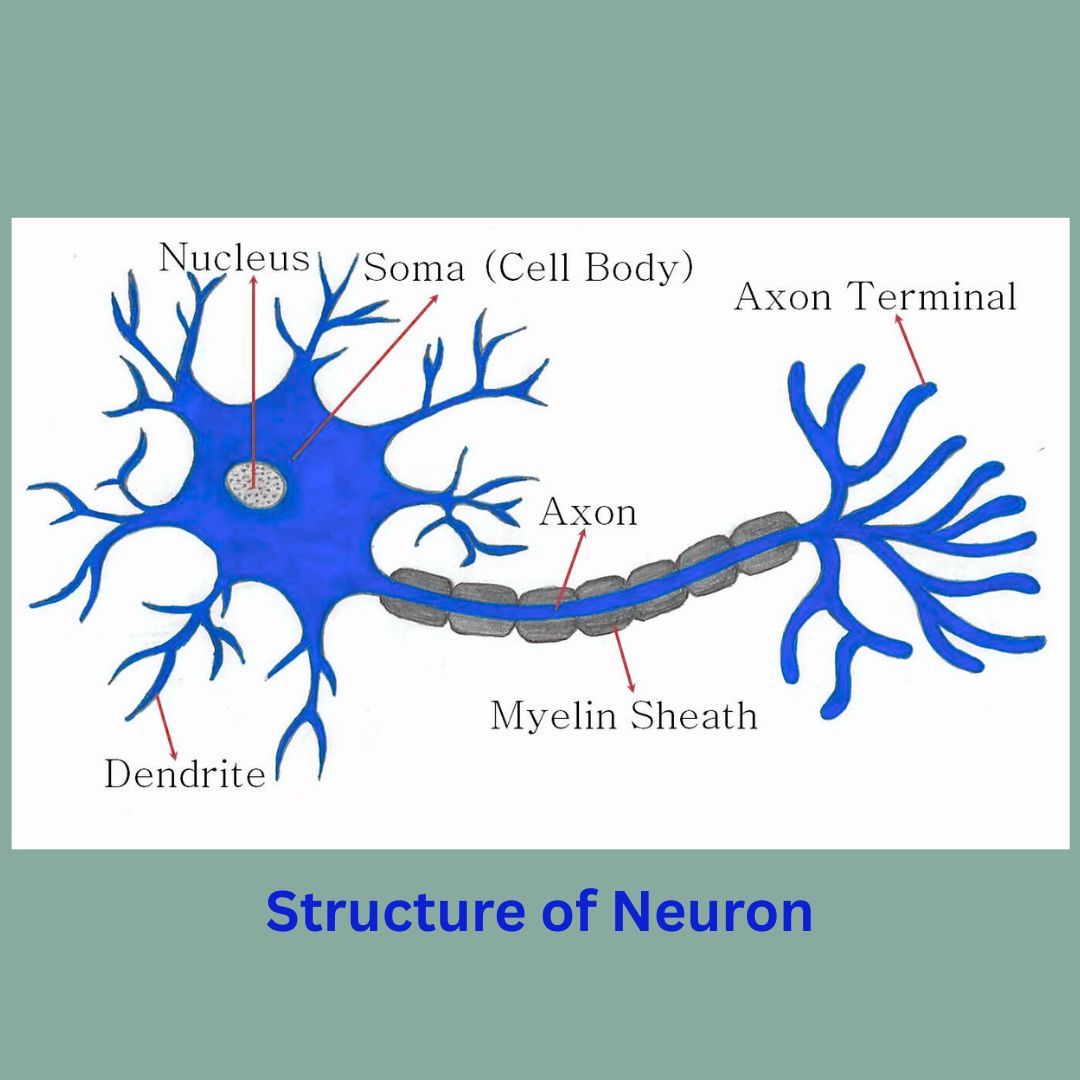
- Dendrites: These are branched, tree-like structures that extend from the cell body. They receive nerve impulses from other neurons and carry them toward the cell body.
- Cell Body (Cyton/Soma): It contains the nucleus, cytoplasm, and essential organelles. The cell body integrates the incoming signals from dendrites and initiates an impulse if the stimulus is strong enough.
- Axon: A long, cylindrical extension that transmits impulses away from the cell body toward other neurons or effectors (muscles or glands).
- Myelin Sheath: A white, fatty covering around the axon, produced by Schwann cells in the peripheral nervous system. It insulates the axon and significantly increases the speed of impulse conduction.
- Nodes of Ranvier: These are small gaps between segments of the myelin sheath. They allow the impulse to "jump" from one node to the next (called saltatory conduction), making transmission faster.
- Axon Terminals: These are branched endings of the axon where the impulse triggers the release of neurotransmitters across a synapse to another neuron or target cell.
- Stimulus is detected by a receptor (e.g., skin)
- Sensory neuron transmits the signal to the spinal cord or brain
- The interneuron processes the signal and sends it to a motor neuron
- The motor neuron carries the signal to an effector (e.g., muscle)
- The effector responds (e.g., withdrawal of hand from hot object)
- Receives Sensory Information: From sense organs through sensory neurons
- Processes and Interprets: All incoming signals like light, sound, smell, etc.
- Initiates Response: Sends motor signals to effectors (muscles/glands) for action
- Maintains Balance and Posture: Via cerebellum coordination
- Regulates Internal Environment: Hunger, thirst, sleep, temperature through hypothalamus
- Stores and Retrieves Memory: Helps in learning and decision-making
- Length: About 45 cm in adults
- Protected by vertebrae, meninges, and cerebrospinal fluid (CSF)
- Divided into 31 segments, each giving rise to a pair of spinal nerves
- Two enlargements:
- Cervical Enlargement: Controls arms and hands
- Lumbar Enlargement: Controls legs and feet
- Ends at L1-L2 vertebra in adults, tapering to form the conus medullaris
- Dorsal Horn: Receives sensory input
- Ventral Horn: Sends motor output
- Lateral Horn: Found in thoracic region, controls autonomic functions
- Conducts sensory information from the body to the brain
- Conducts motor signals from the brain to the body
- Coordinates simple reflexes (reflex arc)
- Vertebrae: Bony protective casing
- Meninges: Three protective layers (dura mater, arachnoid mater, pia mater)
- Cerebrospinal Fluid (CSF): Cushions and nourishes the spinal cord
- 31 pairs of spinal nerves arise from the spinal cord
- Each nerve splits into:
- Dorsal Root: Sensory neurons entering the spinal cord
- Ventral Root: Motor neurons exiting the spinal cord
- Uses hormones for communication
- Hormones are secreted by ductless glands directly into the bloodstream
- Regulates slow, long-term processes
- Maintains homeostasis and internal balance
- If thyroxine levels are high, the pituitary gland reduces TSH secretion
- If glucose levels rise, insulin is released by pancreas to lower it
- Site of Production: Shoot tips (apical meristems) and young leaves
- Main Hormone: Indole-3-acetic acid (IAA)
- Functions:
- Promotes cell elongation in shoots
- Maintains apical dominance (main shoot suppresses lateral buds)
- Initiates root formation in cuttings
- Regulates phototropism and geotropism
- Uses in Agriculture: Rooting hormone, weed control (2,4-D)
- Site of Production: Young leaves, embryos of seeds
- Main Hormone: GA3 (Gibberellic acid)
- Functions:
- Stimulates stem elongation and internode growth
- Promotes seed germination by breaking dormancy
- Induces flowering in some plants
- Delays aging (senescence) of leaves and fruits
- Uses in Agriculture: Seedless grape production, increasing fruit size
- Site of Production: Root tips, transported to other parts via xylem
- Main Hormone: Zeatin, kinetin
- Functions:
- Stimulates cell division and tissue growth
- Promotes lateral shoot growth (overcomes apical dominance)
- Delays aging of leaves (anti-senescence effect)
- Enhances chloroplast development
- Uses: Widely used in tissue culture to promote shoot formation
- Site of Production: Leaves, stems, green fruits
- Functions:
- Inhibits plant growth
- Induces seed dormancy
- Promotes closing of stomata during water stress (anti-transpirant)
- Involved in leaf abscission
- Role in Coordination: Acts as a stress hormone; helps plants survive drought and cold
- Site of Production: Mature fruits, senescing tissues, nodes of stems
- Only gaseous plant hormone
- Functions:
- Promotes fruit ripening
- Accelerates senescence and abscission of leaves and flowers
- Induces horizontal growth in stems
- Stimulates flowering in some plants (pineapple)
- Uses: Used commercially for ripening bananas, mangoes, and tomatoes
- Phototropism: Growth toward light (shoots)
- Geotropism: Growth in response to gravity (roots grow downward)
- Hydrotropism: Roots grow toward water
- Thigmotropism: Response to touch (e.g., tendrils wrap around support)
- Seismonasty: Folding of leaves in Mimosa pudica due to touch
- Photonasty: Opening of petals in response to light
- Thermonasty: Movement in response to temperature
- Auxins are used for root induction in cuttings and to kill weeds selectively
- Gibberellins increase the size of fruits and elongate stems
- Cytokinins are applied to delay leaf yellowing and enhance tissue growth
- ABA is used to improve drought resistance in crops
- Ethylene is used for artificial ripening and synchronized flowering
- What is the difference between a reflex action and walking?
Answer:
What happens at the synapse between two neurons?
Answer: A synapse is the tiny gap between two neurons where information is transferred from one neuron to the next. When an electrical impulse reaches the end of the first neuron (presynaptic neuron), it triggers the release of chemical messengers called neurotransmitters. These neurotransmitters diffuse across the synaptic gap and bind to receptors on the second neuron (postsynaptic neuron). This binding creates a new electrical impulse in the next neuron. After the message is passed, the neurotransmitters are broken down or reabsorbed.- Which part of the brain maintains posture and equilibrium of the body?
Answer: Cerebellum, a part of hindbrain is responsible for maintaining posture and equilibrium( balance) of the body. - How do we detect the smell of an agarbatti (incense stick)?
Answer: When an agarbatti burns, it releases smoke containing tiny smell-producing particles called odor molecules. These molecules mix with the air and enter our nose when we breathe. Inside the nose, there are special olfactory receptors (smell receptors). These receptors detect the odor molecules and convert the information into electrical signals. These signals are then sent to the brain, especially the olfactory region. The brain interprets these signals and we recognize the smell of the agarbatti. - What is the role of the brain in reflex action?
Answer: The brain does not play a direct role in producing a reflex action because reflexes are rapid and protective. Reflex actions are mainly controlled by the spinal cord, which allows the body to respond quickly to danger. However, the brain does have an indirect role. After the reflex action occurs, the spinal cord sends information to the brain. The brain then becomes aware of what happened. This helps us understand the situation, feel pain, and learn from the experience. - What are plant hormones?
- Auxins – Help in cell elongation and growth of roots and shoots.
- Gibberellins – Promote stem growth, seed germination.
- Cytokinins – Help in cell division and delay aging of leaves.
- Abscisic Acid (ABA) – Inhibits growth; helps in closing stomata during stress.
- Ethylene – Helps in fruit ripening.
- How is the movement of leaves of the sensitive plant different from the movement of a shoot towardslight?
Answer: - Give an example of a plant hormone that promotes growth.
Answer: Auxin is a growth promoting plant hormone. - How do auxins promote the growth of a tendril around a support?
Answer: When a tendril touches a support, the side of the tendril that comes in contact with the support receives less light. Auxins (plant growth hormones) move to the shaded or opposite side of the tendril. On this side, auxins cause faster cell elongation. As a result, the shaded side grows longer than the side that is touching the support. This uneven growth causes the tendril to curve and wrap around the support. - Design an experiment to demonstrate hydrotropism.
Answer: Take two troughs A and B. Fill them with soil. In the trough B place, a small clay pot .Plant a small seeding in both troughs. Uniformly water the soil in trough A. but pour water in the clay pot of trough B. After a few days take out the seedling from the troughs. The seedling in trough A which used get uniform water has normal straight roots while roots of seedling planted in trough B show bent growth towards the clay pot containing water. - How does chemical coordination take place in animals?
Answer: Chemical coordination in animals takes place through hormones, which are chemical messengers produced by endocrine glands. These hormones are released directly into the bloodstream and carried to specific organs or tissues called target organs. When hormones reach their target organs, they bring about specific changes such as growth, metabolism, reproduction, stress response, and maintenance of body functions. This system of control and coordination is called the endocrine system. Chemical coordination works slowly but lasts longer than nerve coordination. The brain (especially the hypothalamus) also controls many endocrine glands, helping maintain body balance or homeostasis. - Why is the use of iodized salt advisable?
- How does our body respond when adrenaline is secreted into the blood?
- Why are some patients of diabetes treated by giving injections of insulin?
Answer: Some patients with diabetes, especially those suffering from Type 1 diabetes, are unable to produce enough insulin because their pancreas does not function properly. Insulin is the hormone that helps control the level of glucose in the blood.Since insulin is a protein, it cannot be taken by mouth as a tablet because it would get digested in the stomach. Therefore, such patients are given insulin injections to maintain normal blood sugar levels and prevent complications.
Part-4
- Which of the following is a plant hormone?
(a) Insulin (b) Thyroxin (c) Oestrogen (d) Cytokinin.
Answer: (d) Cytokine.
- The gap between two neurons is called a
(a) dendrite (b) synapse (c) axon (d) impulse
Answer: (b) synapse.
- The brain is responsible for
(a) thinking.
(b) Regulating the heart beat.
(c) Balancing the body.
(d) all of the above.
Answer: (d) all of the above.
- What is the function of receptors in our body? Think of situations where receptors do not work properly. What problems are likely to arise?
Answer: The receptors are usually located in our sense organs such as the inner ear, the nose, the tongue and so on. So gustatory receptors will detect taste while olfactory receptors will detect smell. If these receptors are not working properly, it is harmful to our body.
Eg: If we are suffering from cold, we do not feel the taste of food. - Draw the structure of a neuron and explain its function.
 Answer:
Function of a neuron:
At the end of the axon, the electrical impulse sets off the release of some chemicals. These chemicals cross the gap or synapse, and start a similar electrical impulse in a dendrite of the next neuron. A similar synapse finally allows delivery of such impulses from neurons to other cells, such as muscle cells or gland.
- How does phototropism occur in plants?
Answer: The growth movement in plants in response to light stimulus is known as phototropism. The shoots show positive phototropism and the roots show negative phototropism. This means that the shoots bend towards the source of light whereas the roots bend away from the light source. For example: The flower head of sunflower is positively phototropic and hence, it moves from east to west along with the sun.
- Which signals will get disrupted in case of a spinal cord injury?
Answer: The reflex arc connections between the input and output nerves meet in a bundle in the spinal cord. In fact, nerves from all over the body meet in a .bundle in the spinal cord on their way to the brain. In case of any injury to the spinal cord, the signals coming from the nerves as well as the signals coming to the receptors will be disrupted.
- How does chemical coordination occur in plants?
Answer: In animals, control and coordination occur with the help of nervous system. However, plants do not have a nervous system. Plants respond to stimuli by showing movements. The growth, development and responses, to the environment in plants is controlled and coordinated by a special class of chemical substances known as hormones. These hormones are produced in one part of the plant body and are translocated to other needy parts. For example, a hormone produced in roots is translocated to other parts when required. The five major types of phytohormones are auxins, gibberellins, cytokinins, abscisic acid and ethylene. These phytohormones are either growth promoters (such as auxins, gibberellins cytokinins and ethylene) or growth inhibitors such as abscisic acid.
- What is the need for a system of control and coordination in an organism?
Answer: Controlled movement must be connected to the recognition of various events in the enviroment, followed by only the correct movement in response. In other words, living organisms must use systems providing control and coordination. In keeping with the general principles of body organisation. In multi cellular organisms, specilised tissues are used to provide these control and coordination activities. In animals such control and coordination are provided by nervous and muscular tissues.
- How are involuntary actions and reflex actions different from each other?
Answer:
Involuntary actions
Reflections
i) These are actions which are not controlled by our will.
There are sudden actions.
ii) These are controlled by medulla of our brain.
These are under the control of Mid brain and hind brain.
- Compare and contrast nervous and hormonal mechanisms for control and coordination in animals.
Answer:Nervous mechanism.
Hormonal mechanism.
1. Information is conducted in the form of electrical impulse
Information is transferred in the form of chemicals called hormones
2. Neurons provide point to point contact for transmission of message
Hormones are carried throughout the body through blood.
3. Message travels rapidly.
Message travels slowly
4. Effect of message continues for a very short period.
Effect of message remains for a longer duration
- What is the difference between the manner in which movement takes place in a sensitive plant and the movement in our legs?
Answer: Movement in sensitive plants
- The movement that takes place in a sensitive plant such as Mimosa pudica occurs in response to touch (stimulus).
- For this movement, the information is transmitted from cell to cell by electric chemical signals as plants do not have any specialised tissue for conduction of impulses.
- For this movement to occur, the plant cells change shape by changing the amount of water in them.
Movement in our legs
- Movement in our legs is an example of voluntary actions.
- The signal or messages for these no action are passed to the brain and hence are consciously controlled.
- In animal muscle cells, some proteins are found which allow the movement to occur.
Additional Question Answers
Question 1.Draw a neat diagram showing Reflex arc and label the parts.
Answer:
Question 2. Which organ protects the spinal cord and brain?
Answer: Vertebral column or backbone protects the spinal cord and bony box protects the brain.Question 3.Give one example of chemotropism.
Answer: Growth of pollen tubes towards ovules.Question 4.Which hormones promote cell division?
Answer: Cytokinins.Question 5.Which hormone helps in regulating blood sugar levels.
Answer: Insulin.BOARD EXAM PAPERS (Last 10 Years)
Multiple Choice Questions
- The part of the brain which controls mastication and facial expression is
A. Cerebrum
B. Cerebellum
C. Pons
D. Hypothalamus - This disease is due to the hyposecretion of the hormone
A. Thyroxine
B. Parathormone
C. Insulin
D. Glucagon - __________ is commonly called the personality hormone
A. Adrenaline
B. Thyroxine
C. Insulin
D. Glucagon - Which one of the following contains xanthophyll in excess?
A. Polysiphonia
B. Ectocarpus
C. Spirogyra
D. Ulothrix - Cerebrum controls which one of the following functions?
A. Reasoning
B. Mastication
C. Walking
D. Vomiting - Due to low secretion of insulin in the body, a person will have
A. Low blood pressure
B. High blood pressure
C. High sugar level in the blood
D. Low sugar level in the blood - Two-chambered heart is found in
A. Pisces
B. Amphibians
C. Reptiles
D. Aves - A growing seedling kept in a dark room bends towards light. This phenomenon is
A. Chemotropism
B. Phototropism
C. Hydrotropism
D. Geotropism - The gap between two neurons is called
A. Axon
B. Dendrite
C. Synapse
D. Myelin - Which is the correct sequence of the components of a reflex arc?
A. Receptor → Muscle → Sensory neuron → Motor neuron → Spinal cord
B. Receptor → Motor neuron → Spinal cord → Sensory neuron → Muscle
C. Receptor → Spinal cord → Sensory neuron → Motor neuron → Muscle
D. Receptor → Sensory neuron → Spinal cord → Motor neuron → Muscle - Posture and balance of the body are controlled by
A. Cerebrum
B. Cerebellum
C. Medulla
D. Pons - The movement of the shoot towards light is
A. Geotropism
B. Hydrotropism
C. Chemotropism
D. Phototropism - Which of the following is not associated with the growth of a plant?
A. Auxin
B. Gibberellins
C. Cytokinins
D. Abscisic acid - Iodine is necessary for the synthesis of which hormone?
A. Adrenaline
B. Thyroxine
C. Auxin
D. Insulin - Choose the incorrect statement about insulin
A. It is produced from the pancreas
B. It regulates the growth and development of the body
C. It regulates blood sugar level
D. Insufficient secretion causes diabetes - Select the mismatched pair
A. Adrenaline – Pituitary gland
B. Testosterone – Testes
C. Estrogen – Ovary
D. Thyroxine – Thyroid gland - Guard cells change due to changes in the
A. Protein composition of cells
B. Temperature of cells
C. Amount of water in cells
D. Position of the nucleus - The growth of tendrils in pea plants is due to
A. Effect of light
B. Effect of gravity
C. Faster growth on the side away from support
D. Equal growth on both sides - The growth of pollen tubes towards ovules is due to
A. Hydrotropism
B. Chemotropism
C. Geotropism
D. Phototropism - The movement of the sunflower according to the sun is due to
A. Hydrotropism
B. Chemotropism
C. Geotropism
D. Phototropism - The substance that triggers the fall of mature leaves and fruits is
A. Auxin
B. Gibberellin
C. Abscisic acid
D. Cytokinin - Which statement about nerve impulse transmission is incorrect?
A. Impulse travels from dendrite to axon
B. Chemicals cross the synapse
C. Impulse flows backward in a neuron
D. Neurons transmit impulses to muscles and glands - Involuntary actions in the body are controlled by
A. Medulla of forebrain
B. Medulla of midbrain
C. Medulla of hindbrain
D. Spinal cord - Which of the following is not an involuntary action?
A. Vomiting
B. Salivation
C. Heartbeat
D. Chewing - When a person has severe cold, he cannot differentiate
A. Taste
B. Smell
C. Colour
D. Temperature - The correct direction of flow of electrical impulse is
A. Axon → Dendrite
B. Dendrite → Axon
C. Cell body → Dendrite
D. Synapse → Axon - Which statement is not true about thyroxine?
A. Iron is essential for synthesis
B. It regulates metabolism
C. Iodine is required for synthesis
D. It is a thyroid hormone - Changes at puberty are mainly due to secretion of
A. Estrogen from testes and testosterone from ovary
B. Estrogen from adrenal gland and testosterone from pituitary gland
C. Testosterone from testes and estrogen from ovary
D. Testosterone from thyroid gland and estrogen from pituitary gland - A doctor advised insulin injection because
A. Blood pressure was low
B. Heartbeat was slow
C. Person was suffering from goitre
D. Blood sugar level was high
Answers for MCQs
1. The part of the brain which controls mastication and facial expression is
Answer: C. Pons
Reasoning: The pons is a part of the brainstem that plays a key role in controlling facial expressions and mastication (chewing).
2. A person has defective teeth and protruded tongue. This is due to the hyposecretion of the hormone namely
Answer: A. Thyroxine
Reasoning: A deficiency of thyroxine, a hormone produced by the thyroid gland, can lead to symptoms like a protruding tongue and dental issues due to its effect on metabolism.
3. _______________ is commonly called personality hormone.
Answer: B. Thyroxine
Reasoning: Thyroxine is often referred to as the "personality hormone" because it influences mood and energy levels, which can affect personality.
4. Which one of the following contains xanthophyll in excess?
Answer: D. Ulothrix
Reasoning: Ulothrix is a type of green algae that contains xanthophyll (a pigment) in higher concentrations compared to others.
5. A person has defective teeth and protruded tongue. This is due to the hyposecretion of the hormone namely
Answer: A. Thyroxine
Reasoning: As mentioned earlier, hyposecretion of thyroxine can lead to the described symptoms.
6. The part of the brain which controls mastication and facial expression is
Answer: C. Pons
Reasoning: The pons, located in the brainstem, controls various functions, including facial expressions and mastication.
7. The correct path of the movement of nerve impulses in the following diagram is
Answer:(D) → P → R → S → Q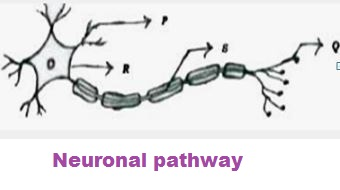
8. Cerebrum controls which one of the following functions?
Answer: A. Reasoning
Reasoning: The cerebrum is responsible for higher brain functions like reasoning, memory, and voluntary movements.
9. Due to low secretion of insulin in the body, a person will have
Answer: C. High sugar level in the blood
Reasoning: Insulin helps regulate blood sugar levels. A deficiency leads to high blood sugar, which can result in diabetes.
10. Two-chambered heart is found in
Answer: A. Pisces
Reasoning: Fish (Pisces) have a two-chambered heart: one atrium and one ventricle.
11. A growing seedling is kept in a dark room. A burning candle is placed near it for a few days, the top part of the seedling bends towards light. What is this phenomenon?
Answer: B. Phototropism
Reasoning: Phototropism is the plant's growth response to light. The seedling bends toward the light source.
12. The gap between the 2 neurons is
Answer: C. Synapse
Reasoning: The synapse is the gap between two neurons where nerve impulses are transmitted.
13. Which is the correct sequence of the components of a reflex arc?
Answer: D. Receptors → Sensory neuron → Spinal cord → Motor neuron → Muscle
Reasoning: The correct order for a reflex arc starts at the receptor, travels along the sensory neuron to the spinal cord, then to the motor neuron and finally to the muscle.
14. Posture and balance of the body is controlled by
Answer: B. Cerebellum
Reasoning: The cerebellum is responsible for maintaining balance and coordinating movements.
15. The movement of the shoot towards light is
Answer: D. Phototropism
Reasoning: Phototropism is the plant's growth response to light, causing the shoot to bend toward the light source.
16. Which of the following is not associated with the growth of a plant?
Answer: D. Abscisic acid
Reasoning: Abscisic acid is involved in the plant's stress response, not directly in growth like the other hormones (Auxin, Gibberellins, Cytokinins).
17. Iodine is necessary for the synthesis of which hormone?
Answer: B. Thyroxin
Reasoning: Iodine is essential for the synthesis of thyroxine, a hormone produced by the thyroid gland.
18. Choose the incorrect statement about insulin
Answer: B. It regulates the growth and development of the body
Reasoning: Insulin regulates blood sugar levels, not growth and development. Growth hormones control that.
19. Select the mismatched pair
Answer: A. Adrenaline: Pituitary gland
Reasoning: Adrenaline is produced by the adrenal glands, not the pituitary gland.
20. Guard cells change due to changes in the
Answer: C. Amount of water in cells
Reasoning: Guard cells in plants change shape in response to the water content in them, which helps regulate stomatal opening.
21. The growth of tendrils in pea plants is due to
Answer: D. Rapid cell divisions in tendrillar cells in contact with the support
Reasoning: The tendrils grow in response to contact with a surface, and cell division occurs in the region of contact.
22. The growth of pollen tubes towards ovules is due to
Answer: B. Chemotropism
Reasoning: Chemotropism refers to the growth response of plants to chemical signals, and pollen tubes grow toward the ovules in response to chemical signals.
23. The movement of the sunflower in accordance with the path of the sun is due to
Answer: D. Phototropism
Reasoning: Sunflowers exhibit phototropism, growing toward light.
24. The substance that triggers the fall of mature leaves and fruits from plants is due to
Answer: C. Abscisic acid
Reasoning: Abscisic acid is the hormone responsible for triggering the fall of leaves and fruits.
25. What is the correct direction of the flow of electrical impulses?
Answer: It is Typically, the flow is from the dendrites to the axon terminals across synapses)
26. Which of the following statements about the transmission of nerve impulse is incorrect?
Answer: B. At the dendritic end, electrical impulses bring about the release of some chemicals, which generate an electrical impulse at the axonal end of another neuron
Reasoning: At the dendritic end, chemical signals (neurotransmitters) are released to stimulate the next neuron, not electrical impulses.
27. Involuntary actions in the body are controlled by
Answer: C. Medulla in hindbrain
Reasoning: The medulla, part of the hindbrain, controls involuntary actions like breathing and heart rate.
28. Which of the following is not an involuntary action?
Answer: D. Chewing
Reasoning: Chewing is a voluntary action controlled by the cerebrum, unlike involuntary actions like heartbeat and salivation.
29. When a person is suffering from severe cold, he or she cannot
Answer: B. Differentiate the smell of a perfume from that of an agarbatti
Reasoning: The ability to smell is affected when a person has a cold due to blocked nasal passages.
30. Which statement is not true about thyroxin?
Answer: A. Iron is essential for the synthesis of thyroxin
Reasoning: Iodine, not iron, is required for the synthesis of thyroxin.
31. Dramatic changes of body features associated with puberty are mainly because of the secretion of
Answer: C. Testosterone from testes and estrogen from ovary
Reasoning: The hormones testosterone and estrogen are responsible for the physical changes during puberty.
32. A doctor advised a person to take an injection of insulin because
Answer: D. His sugar level in blood was high
Reasoning: Insulin injections are commonly prescribed for people with high blood sugar (diabetes).Answer the Following Questions
- What is DNA fingerprinting? Where is this technology used?
-
Imagine the following two situations:
a) Clapping of hands after a program
b) Fluctuation in the blood pressure in the body
How are these two situations functionally different? Give reasons. - The folding up of leaves of a sensitive plant (touch-me-not plant) on touching with a finger is not a tropism. Why?
- Explain the structure and function of the reflex arc with the help of a diagram.
- A person’s face became pale and his breathing increased due to fear. Analyze the process that deals with this situation.
- Draw the diagram to show opening and closing of stomata.
- As the growth advances in a climbing plant (creeper), it appears as though the plant is moving towards a particular direction. How?
- How is dermal tissue adapted to prevent excessive transpiration in plants?
- Why do the leaves of a lotus plant float on water?
- Why is adrenaline called the emergency hormone?
- What are dendrites and axons? Write any one difference between them.
- Write any one function of the cerebellum.
-
Draw a neat labelled diagram of the brain and label the following parts:
a) Cerebrum
b) Cerebellum
c) Brain stem - The thyroid gland of a person aged 45 is underactive. List out the symptoms of the disease suffered by this person.
-
Draw a neat diagram of the cross-section of the spinal cord and label the following parts:
a) Central canal
b) White matter
c) Grey matter
d) Spinal nerve - Draw a diagram to show the vertical section of the human brain and label any four parts.
- Explain the necessity of chemical communication in animals.
- As the creepers grow, they start moving in a specific direction. Explain.
- How are sexual functions in males and females controlled?
-
What hormones control the regulation of the following?
a) Blood sugar
b) Growth
c) Blood pressure
d) Metabolism
e) Fight or flight response - Explain the role of hormones in the movement of plants.
- What is the role of abscisic acid in plants?
- Explain the structure of a neuron.
- Name any two tropisms that occur in plants. Give one example for each.
- Explain the differences between auxins and cytokinins.
-
Which part of the brain regulates the following activities?
a) Thinking
b) Memory
c) Heartbeat
d) Respiration
e) Balance of the body - The functions of hormones are given in Column-A and the names of hormones are given in Column-B. Match them.
Answers
- What is DNA fingerprinting? Where is this technology used?
- Definition: DNA fingerprinting is a technique of identifying individuals by analyzing their unique DNA sequence patterns.
- Uses: Used in forensic science, paternity testing, identification of criminals, resolving disputed parentage, and genetic research.
- Imagine the following 2 situations:
- Clapping of hands after a program → This is a voluntary action, controlled by the cerebrum (decided by will).
- Fluctuation in blood pressure → This is an involuntary action, controlled by the medulla in hindbrain.
👉 Difference: Voluntary actions are under conscious control, involuntary actions are automatic and not under will.
- The folding up of leaves of a sensitive plant (Mimosa pudica) is not a tropism. Why?
- Because it is a nastic movement (response independent of direction of stimulus) and not a tropic movement (directional growth movement).
- Explain the structure and function of reflex arc with the help of a diagram.
- Definition: A reflex arc is the pathway followed by nerve impulses during a reflex action.
- Structure: Consists of receptor → sensory neuron → spinal cord → motor neuron → effector.
- Function: Provides an immediate, involuntary response to a stimulus (e.g., withdrawing hand from flame).
(Diagram: Reflex arc with arrows showing impulse flow.)
- A person’s face became pale and his breathing increased due to fear. Analyze the process.
- This happens due to secretion of adrenaline from adrenal glands.
- Adrenaline increases heart rate, breathing rate, and diverts blood to muscles, preparing body for “fight or flight” response.
- Draw the diagram to show opening and closing of stomata.
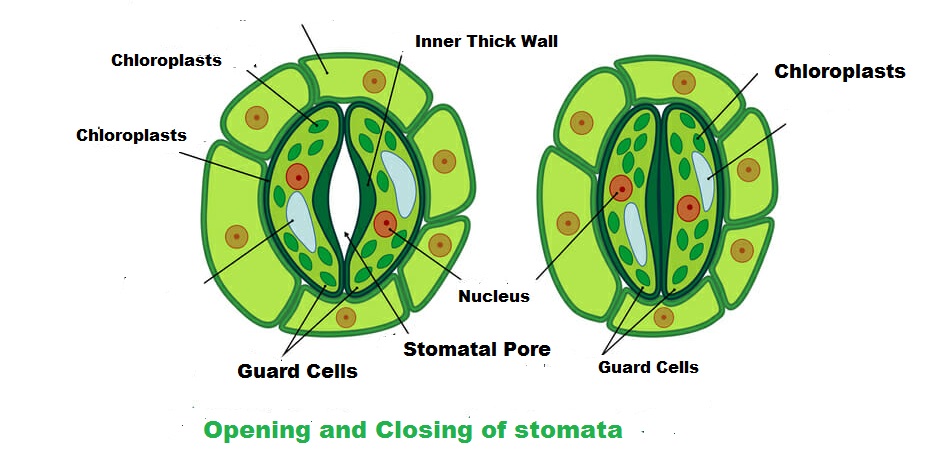
- Open stomata → guard cells swollen (turgid).
- Closed stomata → guard cells flaccid.
- As the growth advances in a climbing plant (creeper) that appears as the plant is moving towards a particular direction. How?
- Creepers show thigmotropism (growth movement in response to touch).
- Tendrils coil around support due to unequal growth on opposite sides.
- How is dermal tissue adapted to prevent excessive transpiration in plants?
- Presence of a thick cuticle (waxy layer) on leaves.
- Stomata mostly on underside of leaves, sometimes sunken.
- Why do leaves of lotus plant float on water?
- Because their petiole has aerenchyma (air spaces) that make them buoyant.
- Why adrenaline is called the emergency hormone?
- Because it prepares the body to face emergency situations by increasing heartbeat, respiration, blood pressure, and energy supply.
- What are dendrites and axons? Write any one difference.
- Dendrites: Short, branched processes of neuron that receive impulses.
- Axon: Long extension that carries impulses away from cell body.
👉 Difference: Dendrites receive signals, axon transmits signals.
- Write any one function of cerebellum.
- Maintains balance and posture of the body.
- The thyroid gland of a 45-year-old person is underactive. List out symptoms.
- Goitre (swelling of neck),
- Obesity,
- Lethargy,
- Pale, dry skin,
- Retarded physical and mental development (in case of children).
- Draw a neat diagram of cross section of spinal cord and label:
- A. Central Canal
- B. White Matter
- C. Grey Matter
- D. Spinal Nerve
- Draw a diagram to show the vertical section of the human brain and label any four parts.
👉 Should include Cerebrum, Cerebellum, Medulla, Spinal cord.
- Explain the necessity of chemical communication in animals.
- Hormones act as chemical messengers.
- They regulate growth, metabolism, reproduction, stress responses.
- Provide coordination between different organs when nerve impulses are not suitable.
- As the creepers grow, they start moving in a specific direction, explain.
- Due to thigmotropism (growth in response to touch).
- Tendrils on side touching support grow slower, opposite side grows faster → coiling around support.
- How are sexual functions in male and female controlled?
- Males: Testosterone (from testes) controls sperm production, secondary sexual characters.
- Females:Estrogen and progesterone (from ovary) regulate ovulation, menstrual cycle, pregnancy.
- What hormones control:
- Blood sugars → Insulin & Glucagon.
- Growth → Growth Hormone (GH).
- Blood pressure → Adrenaline, Noradrenaline.
- Metabolism → Thyroxine.
- Fight or flight → Adrenaline.
- Explain the hormones role in movement of plants.
- Auxins: Phototropism, geotropism.
- Gibberellins: Stem elongation.
- Cytokinins: Cell division.
- Abscisic acid: Inhibits growth, causes stomatal closure.
- What is the role of abscisic acid in plants?
- Inhibits growth,
- Causes dormancy of seeds,
- Promotes aging of leaves,
- Closes stomata during water stress.
- Explain the structure of neuron.
- Neuron has:
- Cell body (with nucleus, cytoplasm).
- Dendrites (receive impulses).
- Axon (long fiber to carry impulses).
- Myelin sheath (insulation).
- Axon terminals (pass impulses to next cell).
- Name any 2 tropisms in plants with examples.
- Phototropism → Shoot grows towards light (e.g., sunflower).
- Geotropism → Roots grow downwards due to gravity.
- Differences between Auxins and Cytokinins
Feature
Auxins
Cytokinins
Function
Promote cell elongation
Promote cell division
Tropism
Control phototropism & geotropism
Delay aging of leaves
Place of action
Shoot tips, root tips
Actively dividing tissues
- Which part of the brain regulates following activities:
A. Thinking → Cerebrum
B. Memory → Cerebrum
C. Heartbeat → Medulla (hindbrain)
D. Respiration → Medulla (hindbrain)
E. Balance of the body → Cerebellum
Match the Following
1. Match Column A with the correct hormone from Column B
Column - A Column - B A) Prepares the body to deal with the situation (iii) Adrenaline B) Regulates metabolism for body growth (vi) Thyroxine C) Regulates blood sugar levels (v) Insulin D) Regulates the growth and development of the body (i) Growth hormone Answer Key:
- A → (iii)
- B → (vi)
- C → (v)
- D → (i)
Match the Following
1. Match Column A with the correct hormone from Column B
Column - A Column - B A) Prepares the body to deal with the situation (iii) Adrenaline B) Regulates metabolism for body growth (vi) Thyroxine C) Regulates blood sugar levels (v) Insulin D) Regulates the growth and development of the body (i) Growth hormone Answer Key: A–(iii), B–(vi), C–(v), D–(i)
2. Match the epithelial tissues
Column-A Column-B Squamous epithelium Elongated cells, small intestine Columnar epithelium Cube-shaped cells, salivary gland Ciliated epithelium Flat cells, oesophagus Cuboidal epithelium Ciliated cells, larynx Answer Key:
- Squamous epithelium → Flat cells, oesophagus
- Columnar epithelium → Elongated cells, small intestine
- Ciliated epithelium → Ciliated cells, larynx
- Cuboidal epithelium → Cube-shaped cells, salivary gland
3. Match the components of blood with their functions
Column-A Column-B Red blood cells Clotting of blood White blood cells Transport substances, store fat, provide internal environment Platelets Develop immunity Plasma Transport oxygen Answer Key:
- Red blood cells → Transport oxygen
- White blood cells → Develop immunity
- Platelets → Clotting of blood
- Plasma → Transport substances, store fat, provide internal environment
LBA Solutions (Lesson Based Assessment)
Difficulty Level No. of Questions Total Marks Weightage Easy 29 43 30% Average 37 72 50% Difficult 15 29 20% Learning Objectives
- Animals – Nervous System
- Reflex action and reflex arc
- Coordination in plants
- Hormones in plants and their functions
- Hormones in animals and their functions
Multiple Choice Questions (1 Mark Each)
- The brain is responsible for:
- A. Thinking
- B. Regulating the heartbeat
- C. Balancing the body
- D. All of the above ✅
- The incorrect statement related to thyroxine hormone is:
- A. It regulates fat metabolism
- B. Its deficiency leads to goitre
- C. It is secreted by parathyroid gland ✅
- D. Iodine is essential for its production
- The gap between two neurons is:
- A. Dendrite
- B. Axon
- C. Synapse ✅
- D. Cell body
- An example of reflex action is:
- A. Folding the chair
- B. Pulling hand back when touching a sharp object ✅
- C. Tasting food
- D. Applause at the end of a programme
- The centre of reflex action is:
- A. Cerebrum
- B. Spinal cord ✅
- C. Cerebellum
- D. Hypothalamus
- The hormone regulating carbohydrate, protein and fat metabolism is:
- A. Testosterone
- B. Adrenaline
- C. Thyroxine ✅
- D. Insulin
- If roots grow towards nitrate concentration, it is:
- A. Phototropism
- B. Hydrotropism
- C. Thigmotropism
- D. Chemotropism ✅
- Which is a mismatched pair?
- A. Adrenaline – Pituitary gland ✅
- B. Testosterone – Testis
- C. Insulin – Pancreas
- D. Thyroxine – Thyroid gland
- Correct path of nerve impulse transmission is:
Dendrite → Cell body → Axon → Nerve ending ✅
- An example of positive geotropism is:
- A. Growth of stem
- B. Growth of roots into the soil ✅
- C. Growth of leaf veins
- D. Upward growth of roots
- The brain part responsible for accuracy of voluntary actions and balance is:
- A. Pons
- B. Cerebrum
- C. Hypothalamus
- D. Cerebellum ✅
- Seedling bending towards candle light is:
- A. Chemotropism
- B. Phototropism ✅
- C. Geotropism
- D. Hydrotropism
- Correct reflex impulse pathway is:
- A. Receptor → Sensory → Brain → Relay → Motor → Effector
- B. Receptor → Sensory → Spinal cord → Relay → Motor → Effector ✅
- C. Effector → Spinal cord → Sensory → Relay → Motor → Receptor
- D. Effector → Motor → Relay → Brain → Sensory → Receptor
- Blood sugar level increases due to:
- A. Undersecretion of thyroxine
- B. More secretion of insulin
- C. More secretion of thyroxine ✅
- D. Excess intake of iodine
- The hormone secreted by pancreas:
- A. Regulates metabolic activities
- B. Regulates blood sugar level ✅
- C. Stimulates growth
- D. Increases breathing rate
- Which of the following is a plant hormone?
- A. Insulin
- B. Thyroxine
- C. Cytokinin ✅
- D. Estrogen
- Correct nerve impulse path in diagram is:
- A. Q → S → R → P
- B. P → Q → R → S
- C. S → R → Q → P
- D. P → R → S → Q ✅
- Part of brain controlling riding a bicycle and writing is:
- A. Cerebrum
- B. Cerebellum ✅
- C. Medulla
- D. Pons
- Part of brain responsible for mouth watering on seeing tamarind:
- A. Cerebrum ✅
- B. Cerebellum
- C. Medulla
- D. Pons
- Movement of pollen grains towards ovary is:
- A. Phototropism
- B. Geotropism
- C. Hydrotropism
- D. Chemotropism ✅
- Plant hormone responsible for phototropism:
- A. Auxin ✅
- B. Cytokinin
- C. Abscisic acid
- D. Gibberellin
- Information sensed by receptors is carried by:
- A. Electrical signals ✅
- B. Blood
- C. Lymph
- D. Vessels
- Upward growth of stem shows:
- A. Positive geotropism & positive hydrotropism
- B. Positive geotropism & negative hydrotropism
- C. Negative phototropism & gravity transduction
- D. Negative geotropism & positive phototropism ✅
- Correct statement about plant hormones:
- A. Cytokinin promotes wilting
- B. Auxin inhibits stem elongation
- C. Abscisic acid inhibits plant growth ✅
- D. Gibberellin promotes leaf abscission
- Pattern of root responses in plants:
- A. Directed & negative phototropism
- B. Positive phototropism & negative geotropism
- C. Undirected & positive geotropism
- D. Growth-dependent & positive hydrotropism ✅
- The response NOT based on growth is:
- A. Stems bending towards light
- B. Roots growing into soil
- C. Leaves tingling when touched ✅
- D. Shoots of a vine rising
Key Answers for MCQs
- D – All the above
- C – It is secreted by parathyroid gland
- B – Synapse
- B – Pulling hand back when touching a sharp object
- B – Spinal cord
- C – Thyroxine
- D – Chemotropism
- A – Adrenaline – Pituitary gland
- C – Dendrite → Cell body → Axon → Nerve ending
- B – C → A → B → E → D
- B – Growth of roots deep into the soil
- B – Cerebellum
- B – Phototropism
- B – Receptor → Sensory neuron → Spinal cord → Relay neuron → Motor neuron → Effector
- A – Undersecretion of thyroxine hormone
- B – Regulates blood sugar level
- C – Cytokinin
- D – P → R → S → Q
- C – Cerebellum
- C – Medulla
- D – Chemotropism
- A – Auxin
- A – Through electrical signals
- D – Negative geotropism and positive phototropism
- C – Abscisic acid inhibits plant growth
- C – Undirected and positive geotropism
- C – Leaves tingle when touched
1 Mark Questions
- What are the tropism movements necessary for growth in the roots and shoots of plants? (MP 2024)
- What is geotropism? (MP 2019)
- What is a neuron? (EXAM–1 2025)
- Which hormone inhibits the growth of plants? (SUP–2022)
- What is reflex action? Give an example.
- How does chemical coordination occur in plants?
- Name the mineral necessary for the production of thyroxine hormone.
- What is the role of abscisic acid in plants? (MAIN–2023)
- What is the function of pancreas as an endocrine gland?
- How do muscle cells respond to nerve impulses?
- What is voluntary action?
- What is involuntary action?
- Name the parts of the human brain that control voluntary and involuntary actions.
- What is the role of receptors in our body?
- Name the plant hormones that promote growth.
- What is the difference between reflex action and walking?
- The folding up of leaves of sensitive plant (touch-me-not plant) on touching with a finger is not a tropism. Why? (MODEL QP–1 2025)
One Mark Questions – Key Answers
- Roots – Geotropism; Shoots – Phototropism
- The movement of a plant part in response to gravity is called geotropism.
- A neuron is the structural and functional unit of the nervous system.
- Abscisic acid inhibits the growth of plants.
- A sudden and automatic response to a stimulus is called reflex action. Example: Withdrawing the hand from a hot object.
- Chemical coordination in plants occurs through plant hormones.
- Iodine
- Abscisic acid inhibits growth and causes wilting of leaves.
- The pancreas secretes insulin, which regulates blood sugar level.
- Muscle cells respond to nerve impulses by contracting and relaxing.
- An action performed with conscious control is called a voluntary action.
- An action that occurs without conscious control is called an involuntary action.
-
Voluntary actions – Cerebrum
Involuntary actions – Medulla oblongata - Receptors receive stimuli and send information to the nervous system.
- Auxin, Gibberellin, Cytokinin
-
Reflex action – Involuntary, controlled by spinal cord
Walking – Voluntary, controlled by brain - The movement is not a tropism because it is not a growth movement; it occurs due to change in turgor pressure.
2 Mark Questions
- A doctor advises an elderly person to consume less sugar in the diet. What disorder is the person suffering from? Name the hormone responsible for this condition.
- How is the function of the thyroid gland helpful for balanced body growth in humans?
- A person’s face becomes pale and the breathing rate increases due to fear. Analyse the process that enables the person to deal with this situation.
- How does chemical coordination take place in animals?
- Write two differences between the functions of endocrine glands and the nervous system.
- Write the functions of the medulla and cerebellum of the human brain.
-
The part of a neuron that helps the nerve impulse pass:
a) Towards the cell
b) Away from the cell - How does adrenaline help an athlete to prepare for a race?
- How does the movement of leaves of the sensitive plant occur when touched?
- Phototropism is beneficial for plants. Justify your answer with suitable reasons.
- What causes mouth watering at the sight of delicious food? Which part of the brain controls this?
- What causes a person who has consumed more alcohol to lose control over the body?
- What causes the stem of a plant to grow towards light and the roots towards the ground?
- Which of the given figures shows the correct tropic movements and why?
- Write two differences between the central nervous system and the peripheral nervous system.
- Write two differences between the endocrine glands and the nervous system.
-
Mention the function of the following plant hormones:
a) Auxin
b) Cytokinin - How do auxins promote the growth of tendrils of climbing plants around a support?
- How does our body respond when adrenaline is secreted into the blood?
Two Mark Questions – Key Answers
- The person suffers from diabetes due to insufficient secretion of insulin.
- The thyroid gland secretes thyroxine, which regulates metabolism and ensures balanced growth.
- Adrenaline prepares the body for fear by increasing heart rate, breathing rate, and blood supply to muscles.
- Chemical coordination in animals occurs through hormones released into the bloodstream by endocrine glands.
Nervous System Hormonal Coordination Electrical impulses Chemical messengers Acts fast Acts slowly Short-term effect Long-term effect - Medulla: Controls involuntary actions
- Cerebellum: Controls posture and balance
- Towards the cell – Dendrite
- Away from the cell – Axon
- Adrenaline increases heart rate and blood flow to muscles, supplying more oxygen.
- Sensitive plant leaves fold due to change in water content of cells.
- Auxin accumulates on the shaded side, causing unequal growth (phototropism).
- Mouth watering is involuntary and controlled by the medulla oblongata.
- Alcohol affects the cerebellum, causing loss of balance and coordination.
- Stem shows positive phototropism; roots show positive geotropism.
- Figure C shows correct tropic movement as roots grow towards gravity.
CNS PNS Brain and spinal cord Cranial and spinal nerves Integrates information Connects CNS to body parts Endocrine System Nervous System Chemical messages Electrical impulses Slow but long-lasting Fast but short-lasting - Auxin: Cell elongation
- Cytokinin: Cell division
- Auxin diffuses to the shaded side and promotes cell elongation.
- Adrenaline increases breathing rate, heart rate, and reduces blood flow to the skin.
3 Mark Questions
- “Functioning of the reflex arc is more effective than the thinking process of the brain.” Justify this statement with scientific reasons.
- In multicellular organisms, chemical communication is more stable and continuous than electrical communication. Give reasons.
- How are phototropism, thigmotropism and chemotropism coordinated in the apparent movement of climbers?
- Name the structure given below. What is its common function? Mention the function of parts A and C.
- Draw a neat diagram of the human brain and label the parts.
- What is the role of insulin, estrogen and thyroxine hormones in the human body?
-
Imagine the following situations:
a) Clapping at the end of a programme
b) Fluctuating blood pressure in the body
How are these situations functionally different? Give reasons. -
“We withdraw our leg unknowingly when stepped on a thorn.”
a) Trace the sequence of events involved in this action.
b) Which part of the human nervous system controls this action?
Three Mark Questions – Key Answers
- Reflex action is faster because it is controlled by the spinal cord and does not involve conscious thinking by the brain, allowing an immediate response to harmful stimuli.
- Chemical communication through hormones is slow but long-lasting and reaches all body cells via blood, whereas electrical impulses are fast but short-lived and limited to nerve pathways.
- In climbers, phototropism directs growth towards light, thigmotropism helps tendrils coil around support, and chemotropism guides growth towards chemical stimuli. These are coordinated by unequal distribution of auxin.
-
Structure: Reflex arc
Common function: Quick response to stimuli
Part A: Effector – produces response
Part C: Sensory neuron – carries impulse to spinal cord - Diagram:
-
- Insulin: Regulates blood sugar level
- Estrogen: Controls female secondary sexual characters and menstrual cycle
- Thyroxine: Regulates metabolism and growth
-
- Clapping: Voluntary action controlled by the forebrain
- Blood pressure regulation: Involuntary action controlled by the hindbrain (medulla)
-
a) Sequence: Receptor → Sensory neuron → Spinal cord → Motor neuron → Effector
b) Controlled by: Spinal cord
4 Mark Questions
- Name the hormones that control the following activities in humans:
a) Blood sugar level
b) Menstrual cycle
c) Emergency situations
d) Metabolism - Name the structural and functional unit of nervous tissue. Write the path of transmission of nerve impulses in this unit and state its function.
- What is a reflex arc? Trace the sequence of events that occur when a bright light is focused on our eyes.
- How is the movement of leaves of a touch-me-not plant different from the movement of a shoot towards light?
- Name the given structure. What is its general function? Mention the function of the parts labeled A and B. Why are these structures efficient in giving quick responses?
- a) As growth advances in a climbing plant, it appears to move towards a particular direction. How?
b) Explain the necessity of chemical communication in animals.
5 Mark Questions
- a) How do climbing plants show directional movement? Explain.
b) Mention the functions of thyroxine and adrenaline hormones in the human body.
4/5 Marks- key answers
- a) Insulin
b) Estrogen
c) Adrenaline
d) Thyroxine
- a) Neuron
b) Dendrite → Cell body → Axon → Nerve ending
Function: Transmits nerve impulses. - Reflex arc pathway explained with example of bright light.
- Differences between sensitive plant movement and phototropism (tabular form).
- Reflex arc gives quick response; sensory neuron carries impulse to spinal cord.
- Which of the following is a plant hormone?
Types of Neurons
| Type | Function | Example |
|---|---|---|
| Sensory Neuron (Afferent) | Carries impulses from sense organs (skin, eyes) to the brain or spinal cord | Touch receptors in skin |
| Motor Neuron (Efferent) | Transmits impulses from the CNS to muscles or glands | Neuron causing muscle contraction |
| Interneuron (Connector) | Links sensory and motor neurons; present in brain and spinal cord | Neurons involved in reflex actions |
Transmission of Nerve Impulse
Myelinated vs. Non-Myelinated Neurons
| Feature | Myelinated Neuron | Non-Myelinated Neuron |
|---|---|---|
| Speed | Faster due to saltatory conduction | Slower as impulse travels along entire axon |
| Appearance | White matter | Grey matter |
| Location | Peripheral nervous system and brain pathways | Spinal cord and brain interiors |
Role of Brain in Control and Coordination
The brain is the main control center of the human body. It is responsible for coordinating all voluntary and involuntary activities. Through its various regions, the brain processes incoming information from sense organs, interprets it, makes decisions, and sends commands to muscles and glands for appropriate response.
Main Roles of the Brain in Control and Coordination
Regions of the Brain Involved
| Part | Function in Coordination |
|---|---|
| Cerebrum | Controls thinking, voluntary actions, memory, speech, and emotions |
| Cerebellum | Maintains posture, balance, and coordination of muscle movements |
| Medulla Oblongata | Controls involuntary activities like heartbeat, breathing, swallowing |
| Hypothalamus | Regulates internal conditions like temperature, hunger, sleep, and emotions |
Coordination with Spinal Cord
The brain works closely with the spinal cord to execute reflexes and quick responses. While reflexes may occur directly via the spinal cord, the brain helps refine and control complex motor activities.
Hormonal Coordination
The brain controls the pituitary gland, which regulates secretion of hormones from other glands. This shows how the brain plays a role in both nervous and endocrine coordination.
Structure of the Spinal Cord
The spinal cord is a long, cylindrical structure made of nervous tissue that extends from the medulla oblongata of the brain down through the vertebral column. It acts as a communication highway between the brain and the rest of the body.
External Structure
Internal Structure
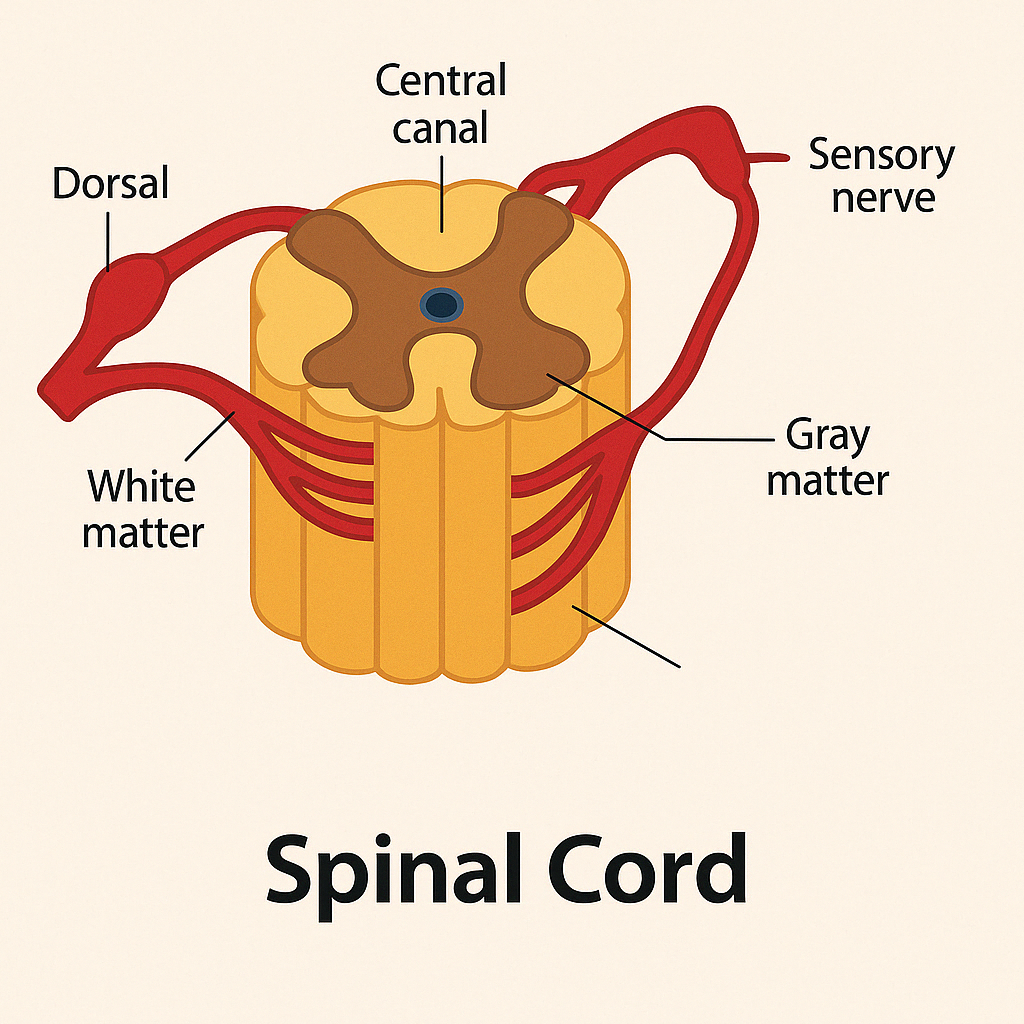
The spinal cord is composed of grey matter and white matter.
| Feature | Grey Matter | White Matter |
|---|---|---|
| Location | Inner, H-shaped region | Outer layer surrounding grey matter |
| Components | Cell bodies, interneurons, unmyelinated fibers | Myelinated axons carrying signals to/from brain |
| Function | Processes information and reflexes | Transmits signals over long distances |
Horns of Grey Matter:
Functions of Spinal Cord
Protective Layers
Spinal Nerves
Role of the Endocrine System in Control and Coordination
The endocrine system plays a vital role in control and coordination by releasing chemical messengers called hormones. These hormones regulate various physiological processes such as growth, metabolism, reproduction, mood, and more. Unlike the nervous system, which provides rapid responses, the endocrine system controls long-lasting and slow responses.
Key Characteristics of Endocrine Coordination
Comparison: Nervous System vs Endocrine System
| Feature | Nervous System | Endocrine System |
|---|---|---|
| Messenger | Nerve impulse | Hormone |
| Speed of Action | Fast | Slow |
| Mode of Transmission | Neurons | Bloodstream |
| Duration | Short-lived | Long-lasting |
| Type of Response | Localized | Widespread |
Major Endocrine Glands and Their Functions
| Gland | Hormone | Main Function |
|---|---|---|
| Pituitary Gland (Master Gland) | Growth hormone, TSH, FSH, LH | Controls growth, other endocrine glands |
| Thyroid Gland | Thyroxine | Regulates metabolism and energy |
| Adrenal Gland | Adrenaline, Cortisol | Controls fight-or-flight response, stress management |
| Pancreas | Insulin, Glucagon | Regulates blood sugar levels |
| Testes (in males) | Testosterone | Controls male sexual traits and sperm production |
| Ovaries (in females) | Estrogen, Progesterone | Controls female sexual traits and menstrual cycle |
Feedback Mechanism in Hormonal Control
The endocrine system works through a feedback loop, mainly negative feedback, to maintain balance. For example:
Endocrine System and Coordination
The endocrine system works in coordination with the nervous system to regulate body functions. For example, during stress, the hypothalamus signals the adrenal glands to release adrenaline, which prepares the body to respond quickly (fight-or-fligh response).
Endocrine Glands: Structure, Location, Hormones & Functions
The endocrine system is made up of several ductless glands that secrete hormones directly into the bloodstream. These hormones regulate vital physiological processes such as growth, metabolism, reproduction, and homeostasis.
Key Endocrine Glands
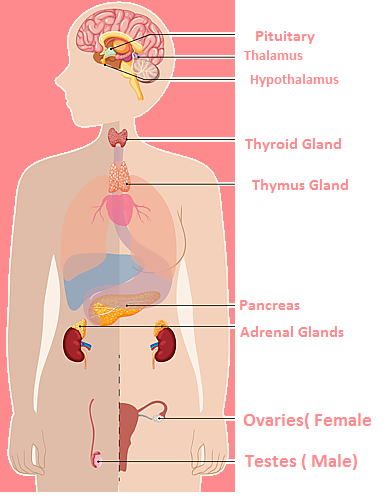
| Gland | Structure & Location | Hormones Secreted | Main Functions |
|---|---|---|---|
| Hypothalamus | Located below the thalamus in the brain. Part of the forebrain. | Releasing hormones (TRH, CRH, GnRH), ADH, Oxytocin (stored in pituitary) | Controls the pituitary gland; maintains body temperature, hunger, thirst, emotions |
| Pituitary Gland (Master Gland) |
A pea-sized gland at the base of the brain, below the hypothalamus | GH, TSH, FSH, LH, ACTH, Prolactin | Controls growth, metabolism, reproduction; regulates other glands |
| Pineal Gland | Small, pine-cone shaped gland in the brain | Melatonin | Regulates sleep-wake cycles (circadian rhythm) |
| Thyroid Gland | Butterfly-shaped gland in the neck | Thyroxine (T4), Triiodothyronine (T3), Calcitonin | Regulates metabolism and growth; lowers blood calcium |
| Parathyroid Glands | Four glands behind the thyroid | Parathyroid hormone (PTH) | Regulates calcium and phosphate balance |
| Adrenal Glands | Above each kidney (triangular) | Adrenaline, Noradrenaline, Cortisol, Aldosterone | Regulates stress, metabolism, blood pressure |
| Pancreas (Endocrine & Exocrine) |
Behind the stomach | Insulin, Glucagon | Controls blood sugar levels |
| Testes (Males) | Located in the scrotum | Testosterone | Male traits, sperm production |
| Ovaries (Females) | Pelvic cavity | Estrogen, Progesterone | Regulates menstrual cycle, pregnancy |
| Thymus | Behind the sternum (shrinks after puberty) | Thymosin | Develops T-cells for immunity |
Coordination Role of Endocrine Glands
These glands ensure that all body systems function harmoniously. Hormones act as chemical messengers, traveling through the bloodstream to target organs where they stimulate specific responses. The release of hormones is often regulated by a feedback mechanism to maintain balance (homeostasis).
Plant Hormones and Their Role in Control and Coordination
Plants coordinate their growth, development, and responses to environmental changes using special chemical substances called plant hormones or phytohormones. Unlike animals, plants do not have a nervous system or muscular system. Instead, they depend entirely on these hormones for control and coordination.
What Are Plant Hormones?
Plant hormones are naturally occurring organic compounds, active in very low concentrations, which influence physiological processes. They are produced in specific parts of the plant and are transported to other areas to regulate processes such as cell division, elongation, flowering, fruit ripening, and response to stimuli like light or gravity.
Major Types of Plant Hormones
There are five main categories of plant hormones, each playing a distinct role in coordination and development.
1. Auxins
2. Gibberellins
3. Cytokinins
4. Abscisic Acid (ABA)
5. Ethylene
Types of Movement in Plants
1. Tropic Movements (Directional)
Growth movement in response to a stimulus from one direction. Controlled by auxins.
2. Nastic Movements (Non-Directional)
These are rapid responses to stimuli that do not depend on the direction of the stimulus.
Importance in Agriculture and Horticulture
Difference Between Control and Coordination in Plants and Animals
| Aspect | Plants | Animals |
|---|---|---|
| System Involved | Primarily involves chemical coordination through plant hormones (phytohormones). | Involves both nervous system and endocrine (hormonal) system for coordination. |
| Speed of Response | Slow response due to only chemical signals. | Fast response due to electrical impulses in the nervous system. |
| Type of Movements | Shows growth-related movements (tropic movements) and touch-sensitive movements (nastic movements). | Shows voluntary and involuntary movements controlled by muscles and brain. |
| Presence of Nervous System | No nervous system present. | Highly developed nervous system present. |
| Hormones Involved | Auxin, Gibberellins, Cytokinins, Ethylene, Abscisic acid. | Adrenaline, Insulin, Thyroxine, Estrogen, Testosterone, etc. |
| Examples | Bending of a plant towards light (phototropism), drooping of touch-me-not (thigmonasty). | Hand withdrawal from hot object, heartbeat regulation, digestion, etc. |
Textbook solutions
Part-1
|
Reflex Action |
Walking |
|
It is an automatic, involuntary action that happens without thinking. |
It is a voluntary action, controlled by the brain. |
|
Occurs very quickly to protect the body from harm. |
Happens at a normal pace and does not need to be extremely fast. |
|
Spinal cord controls most reflexes (brain is not involved immediately). |
Brain controls the movement and coordination of legs. |
|
Example: withdrawing your hand from a hot object. |
Example: choosing to stand up and walk across a room. |
|
No learning or practice needed. Present from birth. |
Requires learning, coordination, and practice. |
Part-2
Answer: Plant hormones are chemical substances produced in small amounts in different parts of a plant. They control and regulate various growth and developmental processes such as cell division, root and shoot growth, flowering, fruit ripening, and responses to light and gravity. They act as chemical messengers that coordinate activities throughout the plant.
Main types of plant hormones
|
Sensitive Plant (Mimosa pudica) |
Shoot Moving Towards Light (Phototropism) |
|
This movement happens very quickly, within seconds when the plant is touched. |
This movement is slow, taking hours or days. |
|
It is a nastic movement (non-directional). It does not depend on the direction of the stimulus, only on touch. |
It is a tropic movement (directional). The movement happens towards the direction of light. |
|
Caused by changes in turgor pressure inside the leaf cells. |
Caused by uneven growth of cells due to plant hormone auxin. |
|
Considered a response to touch (thigmonasty). |
Considered a response to light (phototropism). |
Part-3
Answer: Iodized salt is advisable because iodine is essential for the normal functioning of the thyroid gland. The thyroid needs iodine to produce thyroxine, a hormone that controls metabolism, growth, and development. A deficiency of iodine causes goitre (swelling of the neck) and can also lead to mental and physical disabilities in children. Using iodized salt prevents these problems.
Answer: Adrenaline is the emergency or fight-or-flight hormone. When it is released into the blood, heart beats faster, blood pressure increases, breathing becomes faster and deeper. More blood flows to muscles , liver releases more glucose for energy and the pupils widen and body becomes more alert. These changes prepare the body to face danger or run away quickly.

.png)